Sign In
Create an account and enjoy all the benefits of HAR.com!
Sign In
Sign in using social account


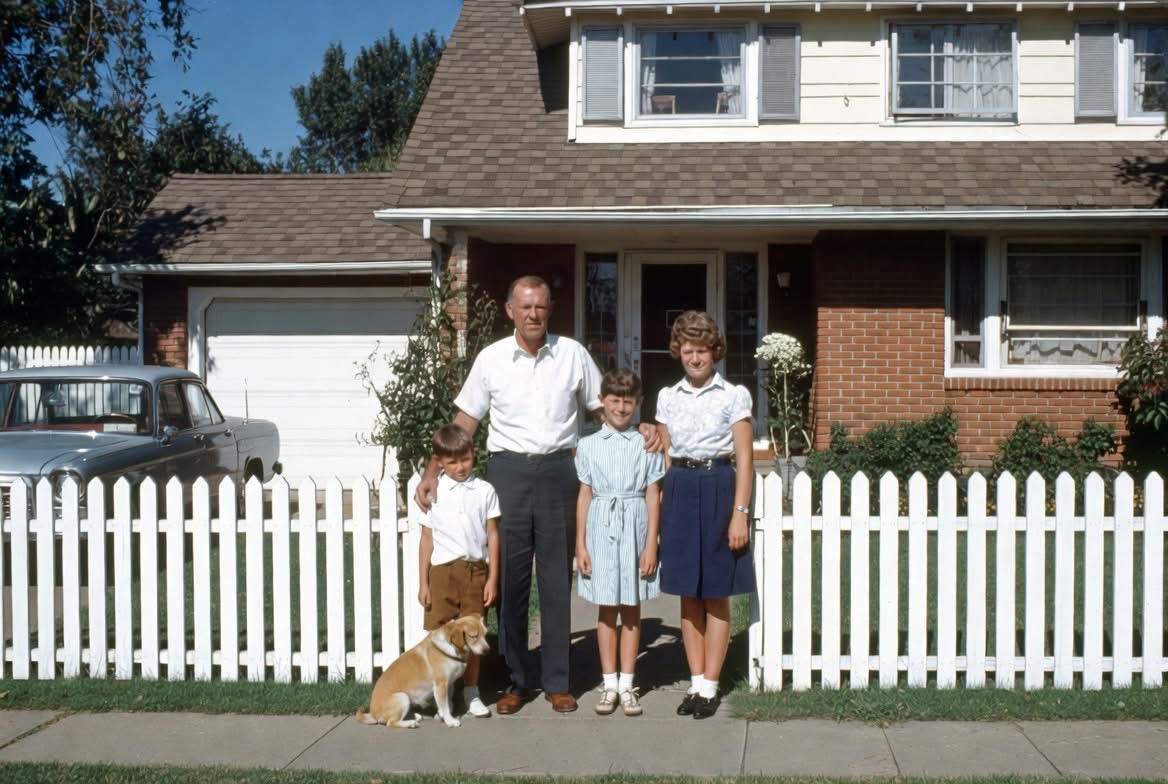
Evolution of Houston Homes Over the Last Century:
Size, Features, Family Dynamics, and Affordability
Houston's housing landscape has transformed dramatically since the 1920s, mirroring broader U.S. trends but influenced by local factors like the oil boom, suburban sprawl, and population growth from migration. Homes have grown larger and more amenity-rich, reflecting shrinking family sizes, rising dual-income households, and shifting social norms. Early 20th-century homes were compact, basic, and affordable on a single wage, suited to larger families in an era of industrial growth. By mid-century, post-WWII prosperity enabled bigger homes on one income. However, from the 1970s onward, stagnant real wages, inflation, and larger homes driven by dual earners made affordability a challenge, contributing to social shifts like increased female workforce participation and delayed family formation.
Data for Houston-specific home features (e.g., bedrooms, bathrooms) is sparse pre-1970s, so I've drawn from Texas and national trends, which align closely with Houston's market (e.g., median prices in Houston tracked 5-10% below national averages until the 2000s). Affordability is measured as the ratio of median home price to median household income (nominal dollars), indicating years of income needed to buy a home (assuming no down payment for simplicity). Family size refers to average household size (people per household), which declined steadily due to lower birth rates, higher divorce, and longer lifespans.
The table below aggregates trends. Home sizes and features are for new or median single-family homes; prices are medians (Houston where available, national otherwise); incomes are median household (national, as Houston data is limited pre-1980s but similar).
| Decade | Avg. Home Size (sq ft) | Avg. Bedrooms | Avg. Baths | Garage Spaces | Avg. Household Size | Median Home Price (Houston/National) | Median Household Income (National) | Affordability Ratio (Yrs of Income) |
|---|---|---|---|---|---|---|---|---|
| 1920s | 1,000 | 2-3 | 0.5-1 | 0 | 4.4 | $4,000 (nat'l) | $1,500 | 2.7 |
| 1930s-40s | 1,100-1,200 | 2-3 | 1 | 0-1 | 3.7-3.9 | $2,900 (1940 nat'l) | $1,200 (1940) | 2.4 |
| 1950s | 1,000 | 3 | 1 | 1 | 3.4 | $7,500 (Houston $7,500) | $3,300 | 2.3 |
| 1960s | 1,300 | 3 | 1-1.5 | 1 | 3.3 | $12,000 (nat'l) | $5,600 | 2.1 |
| 1970s | 1,500 | 3 | 1.5-2 | 1-2 | 3.1 | $35,000 (nat'l) | $9,000 | 3.9 |
| 1980s | 1,700 | 3 | 2 | 2 | 2.8 | $80,000 (nat'l; Houston $70k) | $17,700 | 4.5 |
| 1990s | 1,900 | 3-4 | 2 | 2 | 2.6 | $110,000 (nat'l; Houston $100k) | $30,000 | 3.7 |
| 2000s | 2,100 | 3-4 | 2.5 | 2 | 2.6 | $170,000 (Houston $125k in 2000) | $42,000 | 4.0 |
| 2010s | 2,300 | 3-4 | 2.5 | 2 | 2.6 | $240,000 (nat'l; Houston $220k) | $55,000 | 4.4 |
| 2020s | 2,500 | 4 | 2.5-3 | 2+ | 2.5 | $350,000+ (Houston $278k in 2021) | $68,000 | 5.1 |
Sources: Home sizes/features from U.S. Census AHS and Farm Bureau historical overviews; family sizes from Census historical tables; prices from Census, FRED, and DQYDJ; incomes from Census historical tables and FRED. Houston prices adjusted from national where specific data available (e.g., 1950s local ads $7,500). Ratios rounded; actual affordability factored in mortgages (rates 3-5% mid-century, 7-18% 1980s).
1920s-1940s: Compact Basics for Large Families in Industrial Boomtown Houston Houston exploded from 140,000 residents in 1920 to 400,000 by 1940, fueled by oil and shipping. Homes were small bungalows or cottages (1,000 sq ft), with 2-3 bedrooms for multigenerational or large families (avg. 3.7-4.4 people, often 3-4 kids). Features were minimal: 1 shared bathroom (if any - many used outhouses until the 1930s), no standard garage (cars were luxuries). Electricity and plumbing reached only 1% of homes in 1920. Affordability was high: A $4,000 home required 2.7 years of a $1,500 household income (often single male breadwinner in oil/refining jobs). Socially, the nuclear family was emerging, but one income sufficed for middle-class life amid post-WWI prosperity and New Deal subsidies. The Great Depression (1930s) stalled building, but FHA loans (1934) stabilized markets.
1950s-1960s: Suburban Expansion on Single Incomes Post-WWII baby boom and GI Bill spurred Houston's suburbs (e.g., Sharpstown). New ranch-style homes averaged 1,000-1,300 sq ft, with 3 bedrooms, 1 bathroom, and a 1-car garage - perfect for 3.3-3.4 person families (2-3 kids). Central AC emerged in humid Houston. Prices ($7,500-$12,000) were 2.1-2.3 years of $3,300-$5,600 income. One income (e.g., oil engineer $6,000) covered mortgages at low 4% rates, enabling the "American Dream." Socially, this era idealized the single-earner family; women's roles were domestic, with 30% workforce participation.
1970s: Transition to Larger Homes Amid Oil Volatility Houston's oil boom doubled population to 1.6 million, boosting tract homes (1,500 sq ft, 3 beds, 1.5-2 baths, 1-2 garages) for shrinking 3.1-person families. Split-level designs added rec rooms. Prices jumped to $35,000 (3.9 years of $9,000 income) due to inflation/oil shocks, straining single incomes. Socially, stagflation eroded male breadwinner model; women's labor participation rose to 50%, laying groundwork for dual earners as families adapted to costs.
1980s-1990s: McMansions and Dual-Income Necessity Deregulation and energy bust/recovery saw Houston homes grow to 1,700-1,900 sq ft (3-4 beds, 2 baths, 2 garages), with vaulted ceilings and Houston-specific features like flood-resistant foundations. Households shrank to 2.6-2.8 people. Affordability worsened: $70,000-$110,000 homes = 3.7-4.5 years of $17,700-$30,000 income, with 18% rates in early 1980s. Dual incomes became essential; by 1990, 60% of couples worked both, up from 40% in 1970, as women's earnings offset wage stagnation. Socially, divorce rates peaked (1980s), feminism advanced, and "latchkey kids" symbolized working moms.
2000s-2010s: Luxury Features in a Bubbly Market Subprime boom and recovery inflated Houston prices; homes hit 2,100-2,300 sq ft (3-4 beds, 2.5 baths, 2 garages, often with home offices/gyms). Family size stabilized at 2.6 amid delayed childbearing. $125,000-$240,000 homes required 4.0-4.4 years of $42,000-$55,000 income. The 2008 crash hit Houston hard (oil ties), but dual incomes (70%+ of couples) buffered; single earners fell to <30% of middle-class households. Socially, work-life balance strained, with longer commutes in sprawling Houston.
2020s: Mega-Homes in a High-Cost Era Pandemic demand and remote work pushed sizes to 2,500 sq ft (4 beds, 2.5-3 baths, 2+ garages, smart tech/flood-proofing). Households at 2.5 people prioritize space over density. $278,000+ homes = 5.1 years of $68,000 income, with 7% rates. Affordability crisis forces dual (or multi-) incomes; single-earner middle-class life is rare (20% of families). Socially, gig economy, infertility delays, and immigration sustain growth, but inequality widens, echoing 1920s divides but with dual earners as norm.
In summary, Houston homes evolved from utilitarian shelters to spacious retreats, but at the cost of affordability. Single incomes powered mid-century growth; today, dual earners fund excess space for smaller families, reflecting women's empowerment, economic pressures, and cultural shifts toward individualism. Future trends may favor denser, efficient designs amid climate risks.
Thinking about a move in the near future? Let's chat! Schedule an In-Person Visit




 Erase note
 You currently have no custom folders