Sign In
Create an account and enjoy all the benefits of HAR.com!
Sign In
Sign in using social account


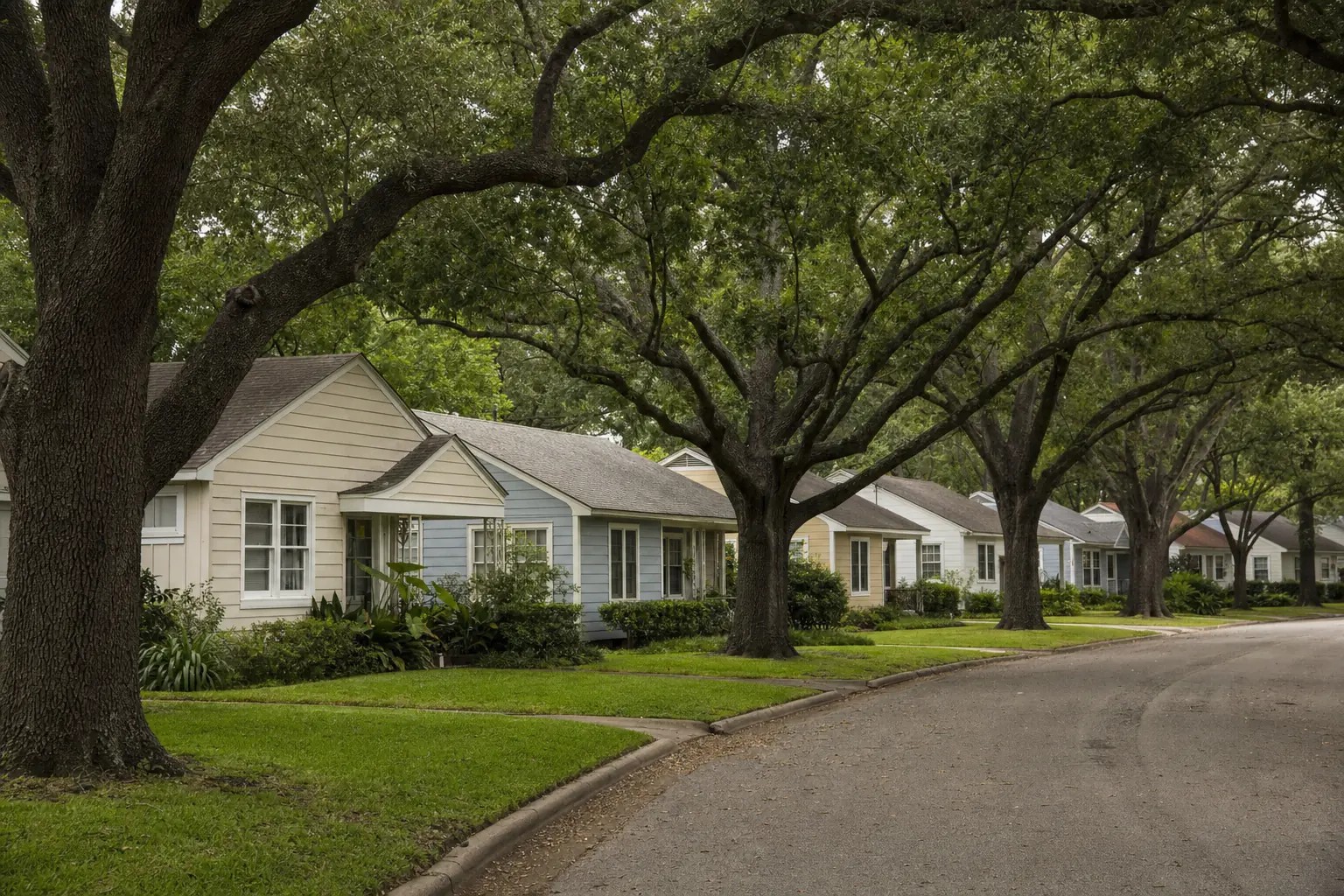
Most towns grow. Lake Jackson was constructed.
The City of Lake Jackson's own history records that Dr. A. P. Beutel, the first General Manager of Dow's Texas Division, proposed building a complete new town in 1941 at the old Lake Jackson Plantation site. Alden B. Dow, a company director and an architect, planned and designed it, and specified that trees be preserved wherever construction allowed. The 200-unit Oak Wood Project was completed in January 1943, with the first family moving in on 26 January 1942 on Trumpet Vine Street. The city was incorporated on 14 March 1944, and Dow transferred the streets, parks, water and sewer system and fire equipment to it.
The street names people notice, This Way and That Way, come from the same design. They are the visible part of a much less visible fact.
A town built in three years has a housing stock that turns 80 in the same three years.
In a town that grew over decades, houses of every age are mixed together and a buyer has no expectations from the address alone.
In the original core of Lake Jackson, the address is informative. A buyer, an inspector and an insurance underwriter all know roughly what era of construction they are looking at before anyone opens a door, and they arrive with the questions that era raises rather than discovering them.
This cuts both ways for a seller, and the favorable direction is worth noticing. A house whose age is obvious is a house whose age is priced in. Nobody is surprised by it. The surprises in these sales are almost never the year the house was built. They are the undocumented work done to it since.
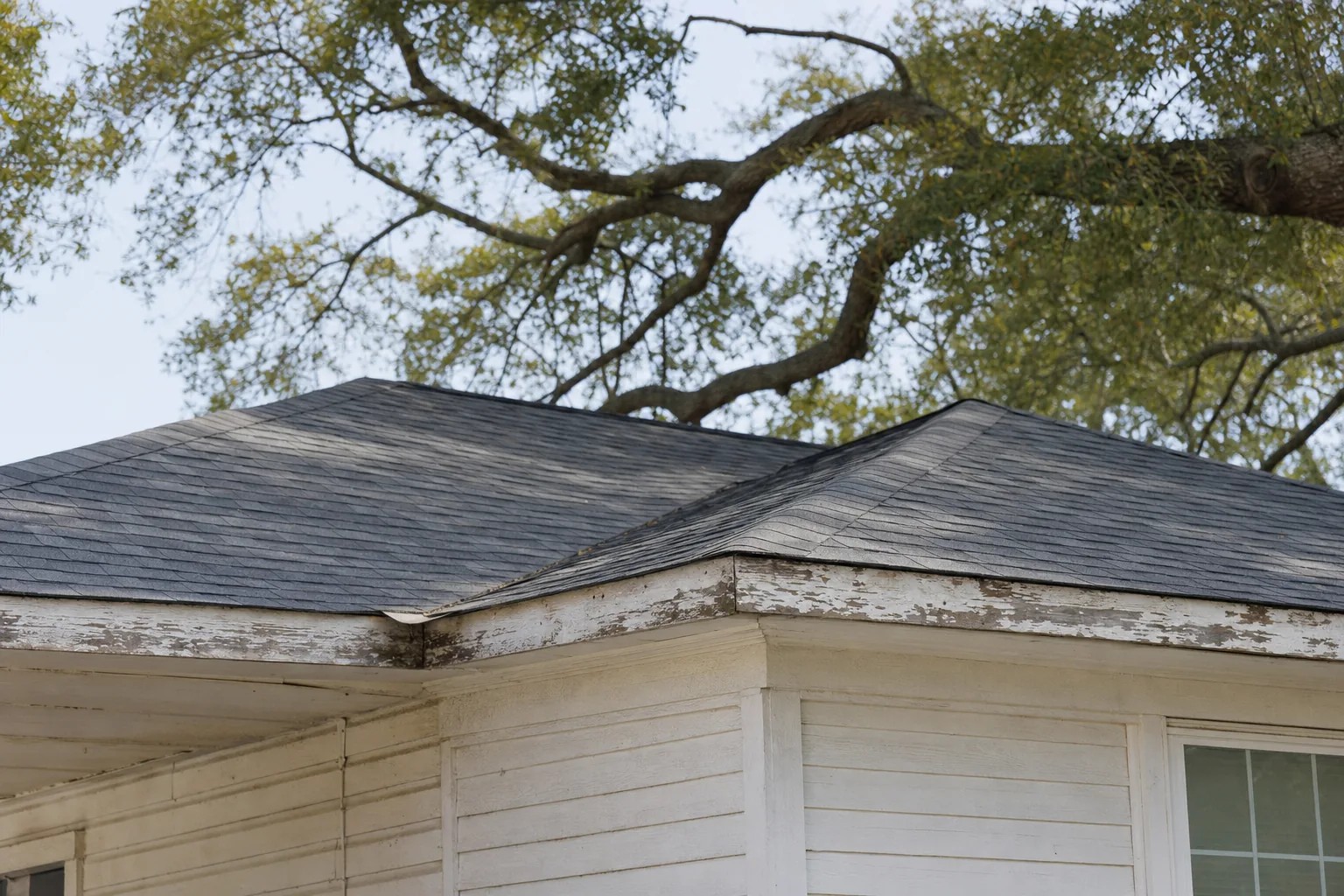
Lake Jackson sits inside the catastrophe area that the Texas Department of Insurance designates along the coast, in the Inland I tier, at a design wind speed of 120 miles per hour. That is the tier above the Inland II towns further inland, including Alvin and Pearland, and below the seaward strip at the beach, where Quintana and Surfside Beach sit.
What the tier actually controls, at a sale, is the windstorm certificate.
A certificate covers construction that was inspected. Roof work, structural repair and additions can qualify, and when they do the certificate is the document that lets a buyer's agent bind coverage without a fight. Work that was never inspected has no certificate. That is true whether the work was excellent or terrible, and it is true whether it was done last year or forty years ago.
On a house built in the early 1940s, the roof has almost certainly been replaced more than once, and much of that history predates any inspection anyone would have thought to ask for. The practical question is not the quality of the work. It is what exists on paper.
Find that out before a buyer's insurance agent does, because that agent will find it, and finding it during an option period is a different conversation than finding it in advance.
There is a recurring confusion in company towns, and Lake Jackson's history disposes of it directly.
The streets, the parks, the water and sewer system and the fire equipment went to the City of Lake Jackson at incorporation. They are municipal. Permits, inspections, floodplain administration and utility service are city functions, run by a real city government with a real counter.
That is a genuine advantage over much of this metro, where an owner's first job is establishing which of four possible governments has the address. In incorporated Lake Jackson, the answer is the city, and the city will put it in writing if you ask in writing.
What the city cannot tell you is anything about a neighboring address, and it cannot tell you about land outside its limits in unincorporated Brazoria County. Confirm which side of that line the property sits on rather than assuming, because a Lake Jackson mailing address and the Lake Jackson city limits are drawn by different organizations for different reasons.
If the house is damaged, the framework underneath every jurisdiction in the state applies here too.
Section 16.315 of the Texas Water Code says all political subdivisions are authorized to take all necessary and reasonable actions that are not less stringent than the requirements and criteria of the National Flood Insurance Program. A floor and not a ceiling. No jurisdiction may go below it and each may go above, which is why standards differ sharply over short distances along this coast.
The test asks whether restoring the structure to its before-damaged condition would cost half or more of the structure's market value immediately before the event.
The value is measured before the damage, so a house sitting gutted does not get a smaller denominator for being gutted. And land is excluded.
On a 1940s house on a mature Lake Jackson lot, where the trees Alden Dow insisted on preserving are now eighty years older and the land carries real value, excluding it can drop the number a repair is measured against well below what an owner expected. A repair that looked modest against the property clears half the structure's value without warning.
Ask the City of Lake Jackson, in writing, for the permit history on the address, and ask specifically whether any permit is open. An open permit is work the city knows about and never signed off, and it sits in the record until somebody closes it.
Ask whether the address is inside the city limits or in unincorporated Brazoria County.
Establish whether a windstorm certificate exists for any work that has been done, and what would be required to obtain one where it does not.
Pull the structure's improvement value from the Brazoria County Appraisal District, not the total appraised value.
Then get a written repair estimate and compare it to the structure value honestly, before hiring anyone and before deciding to sell. Most owners who do this in order find the repair fundable and stay, and where the numbers allow it that is the better outcome.
The pattern worth recognizing is narrow and specific.
Undocumented work from a previous owner surfaces during a retail contract. A windstorm certificate cannot be issued for a roof already closed up. An open permit turns out to have been sitting in the file since before the current owner bought the house. The insurance settlement, if there was one, is partly spent, and the house has been sitting while all of this was being established.
At that point it cannot be listed in its current condition without disclosing all of it, and a retail buyer needs a lender, and a lender needs a house it will fund.
That is where an as-is cash sale becomes worth pricing honestly against the alternative, because it is the route that does not require the house to satisfy a lender and an insurer first. If that is where you are, we buy houses lake jackson tx sets out how an offer on a house with certificate or permit problems is calculated.
I have written separately about the same certificate question one tier inland, where the design wind speed is lower and the paperwork still decides the sale.
I am a licensed Texas real estate agent and I also buy houses in this area for cash, including houses with permit and certificate problems, so treat the paragraph about selling as coming from someone with a commercial interest in it. Nothing here is legal advice.
Dr. Beutel's 1941 proposal, Alden B. Dow's planning and design of the city, the Oak Wood Project's completion in January 1943, the first family's move to Trumpet Vine Street on 26 January 1942, the incorporation on 14 March 1944 and Dow's transfer of the streets, parks, water and sewer system and fire equipment to the city are all taken from the City of Lake Jackson's own published history. The Inland I designation and its 120 mile per hour figure are from the Texas Department of Insurance's published catastrophe area listing, and the federal floor from Section 16.315 of the Texas Water Code. I have not stated the permit or certificate status of any particular address, because that is address-specific and an unverified answer would be worse than none. Ask the city in writing and keep the answer.


 Erase note
 You currently have no custom folders