Sign In
Create an account and enjoy all the benefits of HAR.com!
Sign In
Sign in using social account


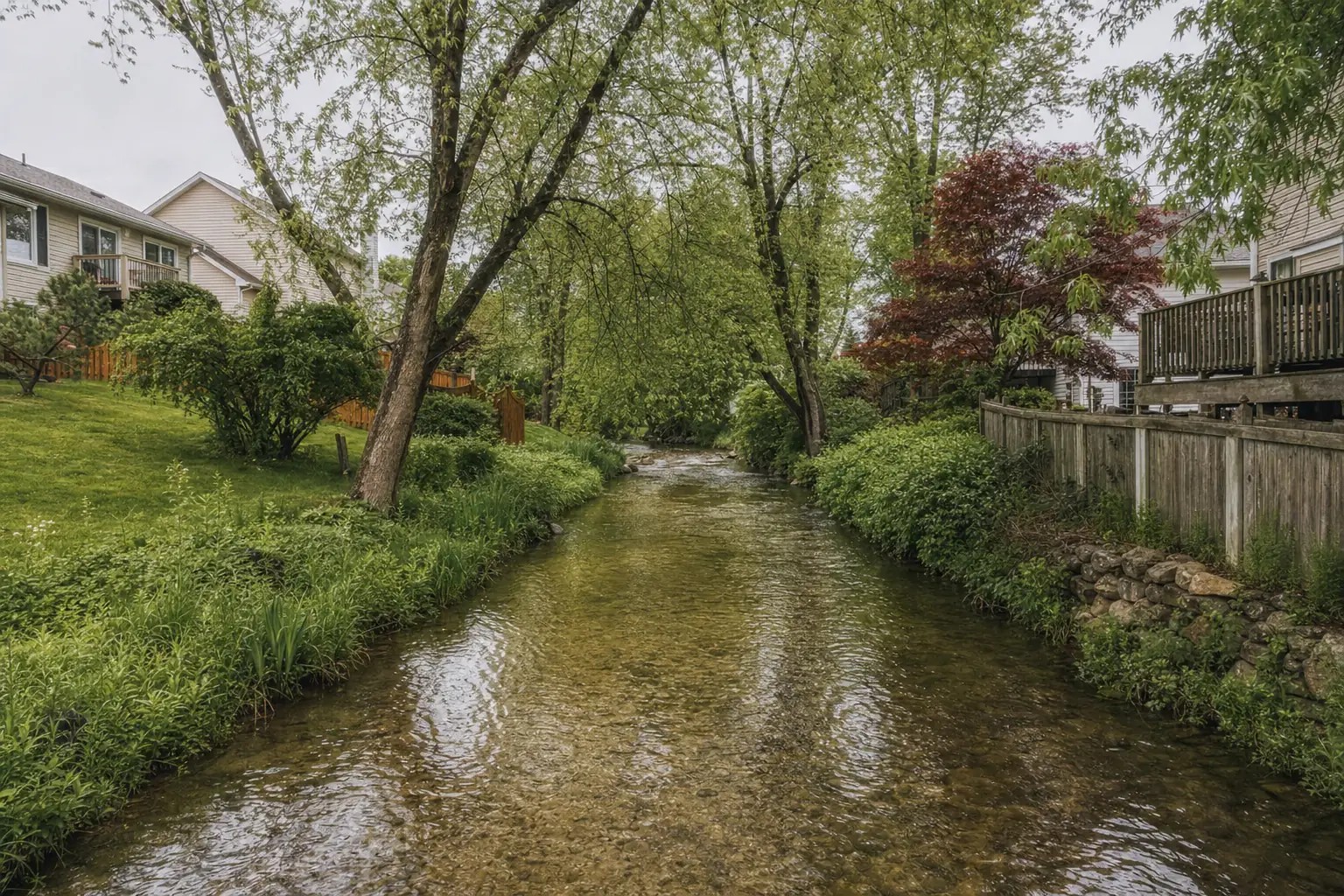
Clear Creek runs through Friendswood, and it is not just a creek. It is the county line. South of it you are in Galveston County. North of it you are in Harris County. One city, one mailing address, two counties, and a watercourse doing the dividing.
That matters for deed records, appraisal districts and probate filings, all of which follow the county rather than the city. It also puts Friendswood inside a state programme most inland owners have never encountered, and at a tier the city shares with almost nobody.
The Texas Department of Insurance runs a windstorm inspection programme covering what it calls a designated catastrophe area: 14 coastal counties, plus parts of Harris County east of Highway 146. Galveston County is one of the fourteen.
Within Galveston County the department divides the area into three zones by design wind speed, and each zone carries a different building standard. The Seaward zone is built to a 130 mph three-second gust design wind speed. Inland I is 120 mph, and covers places including League City, Texas City and Dickinson. Inland II is 110 mph.
Friendswood is the city listed in Inland II. It is the mildest tier in the county, and it is still inside the programme.
Here is the part worth knowing, because it resolves what would otherwise be an impossible question.
The department states that all structures located inside the city limits of a city or town which is divided by the dividing line between Inland I and Inland II shall be subject to the Inland II requirements.
In other words, where the zone boundary cuts through a municipality, the whole city gets the lower standard rather than each house being judged by which side of an invisible line it sits on. That is an unusually sensible rule and it removes a genuine source of argument. It is also the kind of detail a contractor working two counties away will not know.
 What the programme actually asks of an owner
The requirement is not limited to new construction. The department's language is that most new construction, roof replacements, major repairs, and other alterations require an inspection and certificate of compliance.
Two certificates exist. A WPI-8 is issued for ongoing construction. A WPI-8-E is issued for completed construction, and that second form exists because work regularly gets done without anyone calling an inspector.
The consequence is not a fine. Owners who cannot get windstorm cover privately can buy through the Texas Windstorm Insurance Association, and the association requires valid certificates of compliance showing the building meets code. No certificate, no association policy. No policy, and a buyer using a mortgage has a lender that will not fund.
Clear Creek is a drainage feature as well as a boundary, and drainage history is the first thing a serious buyer asks about here, ahead of finishes and ahead of age.
An honest answer costs less than a careful one. Prior water intrusion, a neighbourhood that holds water at the low end, a drainage project that changed how the street sheds: a buyer who hears it from you prices it once. A buyer who discovers it later reprices everything or walks.
Underneath whatever standard applies sits a floor nobody in Texas goes below. Section 16.315 of the Texas Water Code says all political subdivisions are authorized to take all necessary and reasonable actions that are not less stringent than the requirements and criteria of the National Flood Insurance Program.
A floor, not a ceiling. Every jurisdiction may go above it and around this metro they have, by very different margins.
The substantial damage test asks whether restoring the structure to its before-damaged condition would cost half or more of the structure's market value immediately before the event. Measured before the damage rather than in the current gutted state, and excluding land value. On the larger wooded lots here, stripping the land out can drop the figure the fifty percent is measured against well below what an owner assumed.
If the property came through an estate, the county question stops being trivia. An affidavit of heirship or a probate document has to be recorded in the county where the land actually sits. Filed on the wrong side of Clear Creek it gives notice of nothing, the chain of title stays broken, and the title company finds it during the commitment.
Establish the county before filing anything. It is one call and it is free.
Confirm which county your address sits in. Search for the windstorm certificates that exist on the property, because a buyer's insurance agent will. Reconstruct the work history honestly, particularly roofs. Ask the city whether a substantial damage determination has been made. Pull the structure's improvement value from the correct county's appraisal district, not the total appraised value. Then get a full written repair estimate and set the two numbers side by side.
Do that before hiring anyone and before deciding to sell. Many owners here find the gap closeable and the repair fundable, and where that is true, staying is the better outcome by a distance.
The failure is specific. A certificate gap or a determination surfaces mid-contract. The retroactive route takes money and weeks nobody planned for, the buyer's rate lock runs down, and the deal dies. The house sits through another season while the next buyer's lender asks the identical question.
At that point the honest comparison is between what an as-is sale nets and what finishing the work actually costs, not between an offer and what the house was worth before any of it began. A cash buyer is not waiting on an insurability answer. If that is the comparison in front of you, we buy houses friendswood tx sets out how an offer on a house with certificate or condition problems is calculated.
I have written the Seaward-zone version of the same programme separately, in the paper that decides whether a coastal house can be insured at all.
I am a licensed Texas real estate agent and I also buy houses in this area for cash, including ones with certificate and condition problems, so treat the paragraph about selling as coming from someone with a commercial interest in it. Nothing here is legal advice and it is not insurance advice.
The zone structure, the design wind speeds, Friendswood's placement in Inland II, the divided-city provision, the inspection requirement and the two certificate types all come from the Texas Department of Insurance's own published material for Galveston County. Clear Creek as the county boundary is a matter of public record. The federal floor is quoted from Section 16.315 of the Texas Water Code. Certificate decisions are the department's and permit decisions the city's, not mine.


 Erase note
 You currently have no custom folders