Sign In
Create an account and enjoy all the benefits of HAR.com!
Sign In
Sign in using social account



Foreclosures are ticking up. And that may make your mind jump straight to thoughts of 2008 specifically to what happened to the market during the housing crash. So, lets do exactly what your brain already wants to do, and see if theres any connection there.
The simple truth is foreclosure filings are rising. But theyre nowhere near crisis levels. And thats not where theyre headed either. Heres why.
Take a look at serious delinquencies loans where the homeowner is more than 90 days late on their mortgage payments.
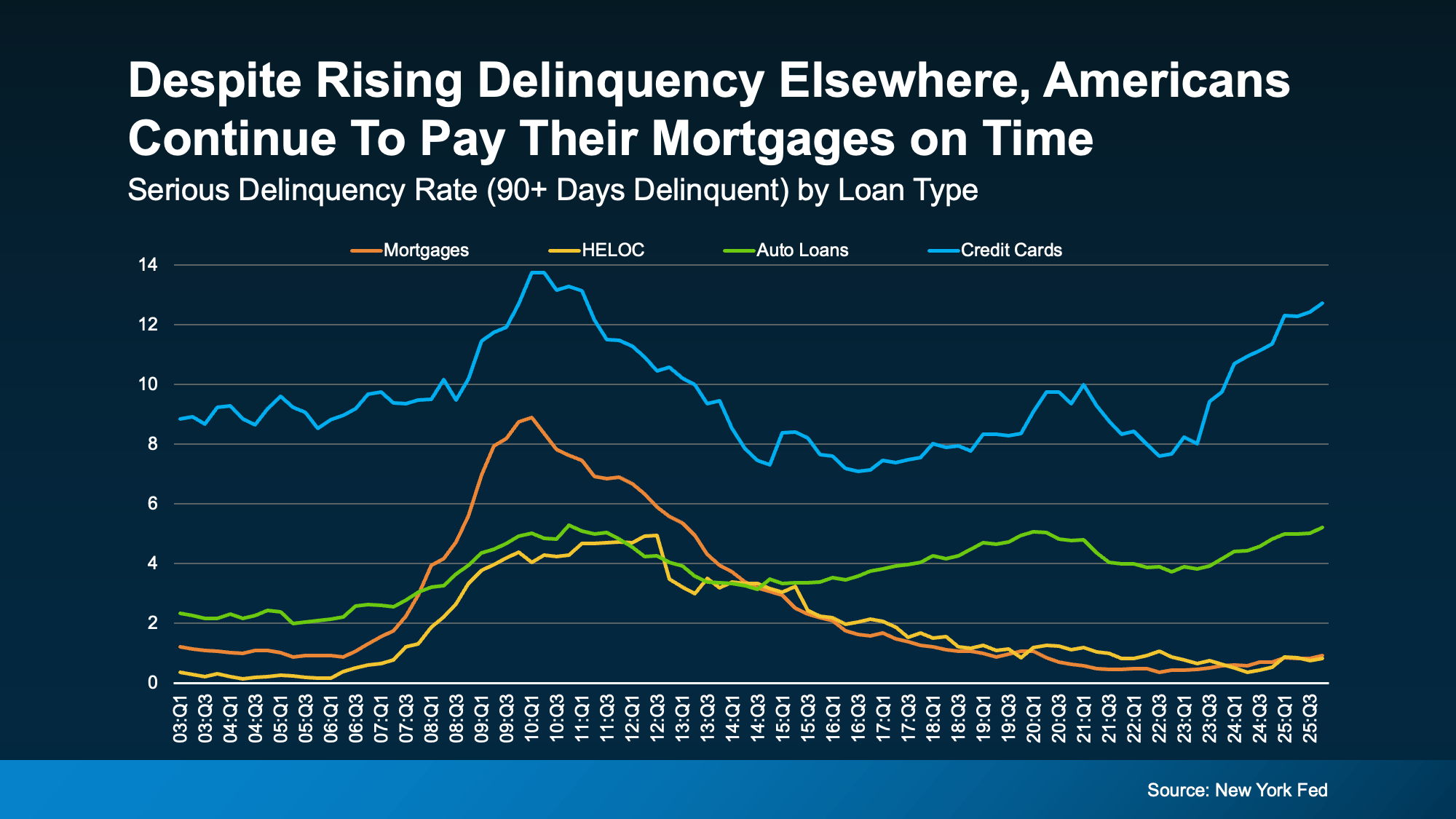
While those have increased slightly, data from the New York Fed shows they still remain low. And they arent anywhere close to levels seen when the market crashed (see graph below):
 Right now, about 1% of mortgages are seriously delinquent. Thats only 1 in 100.
In the years around the crash, they were up around 9%. Thats 1 in 11.
Thats a big difference.
And its important to remember not all delinquencies even become foreclosure filings. Some homeowners who are falling behind will work out repayment plans with their banks and lenders because banks dont want to see a wave of foreclosures either.
Thats why foreclosure numbers are even lower than delinquencies. ATTOM shows only 0.3% of all homes are currently going through a foreclosure filing. And those wont even all go to a full foreclosure. Thats not a wave. Thats a ripple at most.
And maybe youre wondering, if people are struggling financially, why arent there more foreclosures? Heres the easiest way to answer that.
When households feel financial pressure, they tend to prioritize their mortgage payment above almost everything else. Because the last thing they want to lose is their home.
Data from the New York Fed shows serious delinquencies have risen more for credit cards and auto loans (the blue and green lines). But mortgage delinquencies and home equity lines of credit (borrowing against the value of your home) arent seeing the same big uptick (the yellow and orange lines). Theyre a lot more stable overall.
 In other words, people may fall behind on other debts, but they fight hard to keep their homes. And, in todays housing market, theyre also in a strong equity position to do so.
Many people have built significant equity over the past several years. And that creates options. As Daren Blomquist, VP of Market Economics at Auction.com, explains:
Distressed homeowners many times they still have equity in their homes. Theres an opportunity for them to sell that home, avoid foreclosure, and walk away with equity.
Thats a major difference from 2008. Back then, many homeowners owed more than their homes were worth. And selling wasnt an easy solution. Today, for many people, it is. And even in situations where equity isnt enough, homeowners are encouraged to contact their loan servicer early to explore alternatives to foreclosure.
Are foreclosure filings rising slightly? Yes. Are they anywhere near crash territory? No. And homeowners today have far more equity and flexibility than they did during the crash.
If youre concerned about what youre seeing in the headlines, the best move isnt panic, its perspective. And the data right now says this isnt 2008 all over again.




 Erase note
 You currently have no custom folders