Sign In
Create an account and enjoy all the benefits of HAR.com!
Sign In
Sign in using social account


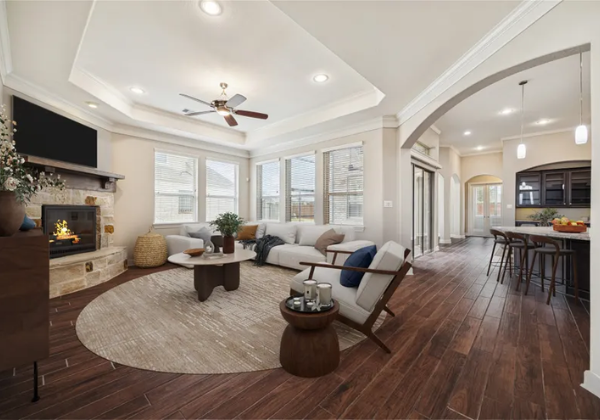
Buying one home before selling the existing home is a delicate dance. REALTOR® Sara Lyn Nguyen is here to help you smoothly navigate the transition between two homes. When you work with an experienced realtor, this professional can guide you through looking ahead to the various steps in the process of selling your home plus locating your next home with as little stress as possible. In an earlier blog post, Pros and Cons: Selling Before Buying Your Next Home, I discussed the advantages and drawbacks of selling before buying your next home. For today’s article, we’ll look at options for finding balance in the process.
Ultimately, the goal is to have both transactions closing on the same day or with the sale occurring slightly earlier to secure funds. Common strategies to align these timelines may use one of these options:
This is a contract clause stating that you plan to purchase the new home only if your current home sells within a specific time period. This approach holds less risk for you, as the buyer, but also can make your offer less competitive in a hot market when the seller is considering more than one offer. Utilizing a home sale contingency protects the buyer from owning two homes at the same time when the funds from their current home are needed to afford the new home.
This strategy, also known as back-to-back closings, requires intense coordination. Working with one title company to manage the transfer of funds and deeds sequentially makes the transition smooth. The sale of your home and transfer of funds would close first. Next, those funds are then immediately transferred to cover the purchase of the new property. This type of closing eliminates the need for temporary housing waiting for a home to become available for move-in and also eliminates the need for utilizing a bridge loan.
These short-term loans, covering periods between 3-12 months, are excellent options for sellers to bridge the gap between selling their home and buying their new home. Bridge loans are offered by lenders to allow homeowners to use the existing home's equity for a down payment. It’s an efficient and fast option, but these types of loans often include higher interest rates, applicable fees, and the risk of managing two mortgages simultaneously.
This line of credit is rooted in your home’s equity, meaning the lender would base the loan amount against the equity of your home. For instance, a homeowner may qualify to borrow up to 85% of their home's appraised value, minus the existing mortgage balance. Having this type of line of credit allows a homeowner to borrow, repay, and borrow again as needed—similar to how a credit card works. A variable interest rate is often applicable, which can make payments unpredictable. Something that makes a HELOC attractive to homeowners is that they often have lower closing costs than traditional loans, and some lenders do not charge annual or origination fees.
With a rent-back agreement, the brand-new buyer agrees to delay their move-in date and become a landlord to the previous homeowner. This is agreed upon in a short-term contract, ranging between 30-90 days, while the previous owner finalizes things in their own home purchase or new-build construction. Things happen that can cause unanticipated delays, and using this type of agreement is a way for a new buyer to generate some income while helping the seller bridge the gap between the sale and their move date.
Since 2004 Sara Lyn Nguyen continues to bring a wealth of knowledge and expertise about buying and selling real estate around the Houston area to those she serves. Sara is a multi-year award winning REALTOR® and relocation specialist where her clients trust her to have up-to-date information on the real estate market. She has been one of Gary Greene’s Multi-Million Dollar Top Producers, and citywide was the #2 Top Producing agent in 2020, #3 in 2021, #2 in 2022, #5 in 2023 and 2024. When it’s time to buy, sell, invest, or relocate speak with a trusted professional knowledgeable in the homes and neighborhoods of Fort Bend/Sugar Land and the surrounding region.




 Erase note
 You currently have no custom folders