Sign In
Create an account and enjoy all the benefits of HAR.com!
Sign In
Sign in using social account


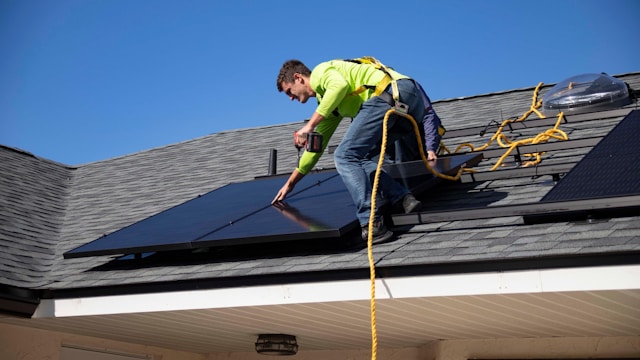
Houston’s sunny climate along with Houston being a leader in renewable energy makes investing in solar panels for your home a topic worth considering. Add in that panels are eco-friendly and capable of reducing energy costs over the long-term and you’ll soon understand why you see so many homes across the metroplex with solar panels. You may be wondering if solar panels are a good match for your home. Let’s explore some frequently asked questions around solar panels to help you decide for yourself.
When you contact a solar panel installer, they will visit your home to look at your roof’s condition, the roof’s orientation and natural shade as well as the overall available space on your roof. If your roof is damaged or showing its age, it may be necessary to replace the roof before solar panel installation could take place. South-facing roofs are ideal but both east- and west-facing roofs can work if the natural shade isn’t too widespread. Your local installer can help you determine if there are any local municipality regulations or restrictions pertaining to solar panels in your neighborhood.
It’s helpful to keep in mind that some buyers may not want solar. Depending on the loan program, some programs are required to be paid off at closing—not all solar programs are transferable. Some people also worry about the potential of leaks and/or other roof issues that may arise with installation of panels.
Solar panel systems are sizable investments upfront and the cost savings come over the long term. When you consult with the professionals, they often provide energy usage analysis to help you understand your home’s usage, set a budget, determine your upfront costs and regular maintenance costs.
Solar panels typically have a payback period of 7-10 years before a homeowner can start generating net savings. The panels can lower your monthly electricity bills with savings varying based on your energy consumption, local rates, and overall size of your home and panel system installed.
Homes with solar panels can increase the home’s assessed value possibly leading to higher property taxes.
For homeowners not making a cash purchase, you do have several financing options such as:
Leasing: A homeowner allows a third-party company to install and maintain the solar panels on their home in exchange for fixed monthly payments for the electricity that is generated. The homeowner benefits from reduced or eliminated electricity bills, depending on how much energy your home uses and how efficient your solar system is.
Power Purchase Agreements (PPAs): PPAs are similar to leasing as this option also has a third-party company who owns and maintains the solar system. The homeowner purchases the electricity at a fixed rate. When comparing leasing to PPA it’s essential to remember that with a lease, you pay a fixed monthly amount regardless of energy production, while with a PPA, you pay for the electricity generated by the solar system at a fixed rate per kilowatt-hour (kWh).
Solar Loans: This is a personal loan secured by the solar equipment. These loans are separate from home mortgage loans. The loan will have a monthly payment and spread the installation cost over an extended payback period based to the loan terms. There may be applicable dealer fees or higher interest rates.
Home Equity Loans or Refinancing: This approach uses your home’s equity to finance a loan or refinancing to pay for the cost of solar panel and maintenance.
Property Assessed Clean Energy Program (PACE): This financing program is available in Texas for solar panels and other energy efficiency improvements. It allows property owners to finance these projects by adding a special assessment to their property taxes, which is repaid over time (typically 20-30 years). Properties within the City of Houston and the Houston ETJ can access the PACE program.
Federal Solar Investment Tax Credit (ITC): This tax credit allows for a dollar-for-dollar reduction in federal income taxes owed, effectively lowering the net cost of a solar installation. You may recall your tax preparer asking if in the past year you installed solar panel, upgraded windows, etc. when preparing your annual taxes. The tax preparer is checking to see if you may qualify for this tax credit.
The Residential Clean Energy Credit: This program offers a 30% tax credit for solar installations and Texas law exempts solar installations from increasing property taxes.
Property Tax Exemption: While solar panels may increase property value, they are exempt from property tax increases in Texas.
Utility Specific Rebates: Some utilities in the Houston area, like Oncor and SMTX, may offer their own rebate programs for solar installations.
American Electric Power (AEP) SMART Source Solar PV Program: AEP Texas offers rebates for residential and commercial solar installations, with amounts varying based on system size and capacity.
Solar Switch Houston: This program, facilitated by Solar United Neighbors and iChoosr, helps Houston homeowners access group discounts and learn about federal solar incentives.
The Database of State Incentives for Renewables and Efficiency (DSIRE): This comprehensive database is ideal for Houston residents to search for and find solar energy incentives in the Greater Houston area, the state of Texas, and across the entire country. Simply enter your zip code and answer the online questions to see the search results.
Net Metering: Some utility providers in Texas offer net metering, which allows you to receive credits for excess electricity you send back to the grid. There is no statewide net metering law in Texas, but many major utility companies will pay full retail price for your credits.
If you think solar panels are right for your home, I encourage you to consult with several local professionals and compare quotations. Ask questions so you can make an informed decision. If you’re looking for a home that already has solar panels, let’s chat. I’ll do my best to help you find a place you’ll love.
Since 2004 Sara Lyn Nguyen continues to bring a wealth of knowledge and expertise about buying and selling real estate around the Houston area to those she serves. Sara is a multi-year award winning REALTOR® and relocation specialist where her clients trust her to have up-to-date information on the real estate market. She has been one of Gary Greene’s Multi-Million Dollar Top Producers, and citywide was the #2 Top Producing agent in 2020, #3 in 2021, and #2 in 2022. When it’s time to buy, sell, invest, or relocate speak with a trusted professional knowledgeable in the homes and neighborhoods of Fort Bend/Sugar Land and the surrounding region.




 Erase note
 You currently have no custom folders