Sign In
Create an account and enjoy all the benefits of HAR.com!
Sign In
Sign in using social account


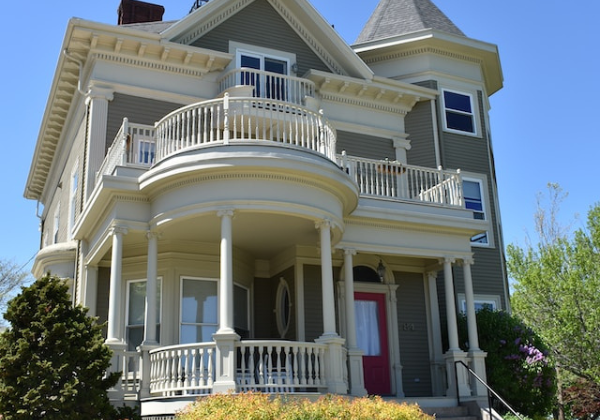
Historic districts can be created by federal, state, or local governments. The size of these districts can be determined to comprise an entire neighborhood or a smaller area of only a few homes. The differences will depend on the historical or architectural significance along with varying contributing factors.
When a home is designated on the federal level, it is listed on the National Register of Historic Places. These landmarks hold national importance for their impact on history, architecture, archeology, technology, or culture. The home could be related to a significant U.S. historical event or be the birthplace or residence of someone who made a vital historical impact. This type of register is an honorary status which may include some financial incentives.
A state listing is referred to as a State Register of Historic Places and is similar to the national register but with the significance relevant on a state level. The state register can also be an honorary status.
A local level listing quite frequently enjoys the greatest protection legally from any threats which may compromise the historic integrity. This is due to many land-use decisions being made on the local level. The administration of a local historical district can happen on the county or municipal level.
Simply because a home is older doesn’t necessarily mean it is deemed a historic home and should be part of a historic register. Any or all of these qualities can be used to determine if a property should be preserved as historic:
Understanding the importance of the history linked to the home may make you wonder what it is like living in a historic home distract and this is a good point to consider. When entire neighborhoods are designated as historic districts this encompasses specific buildings and streets to be protected and preserved. For anyone living in a historic district, homeowners will need to maintain the home as close to its original design and condition. This includes colors and architectural characteristics.
Living in such a home comes with a sense of pride in preserving history, in enjoying the charm of an older home, and wanting to protect the home from falling in ill-repair for future generations to enjoy. History buffs are often drawn to owning and living in a historic home. It’s all part of their love and appreciation of history. You may find you share common interests with your neighbors because of your interests in historic homes.
Such homes can be beautiful settings to serve for hosting weddings, special events, or opening to the public to give historical tours.
According to the City of Houston’s Planning and Development Department’s Historic Preservation Manual, Houston has a variety of historical districts. Click here to view Houston’s Historic District map and be sure to visit their website for more details on these charming districts.
Audubon Place: This is part of the original Montrose Addition developed in the 1910s and 1920s. The district is centered around the Audubon Place Boulevard. The architectural styles found in this area include Craftsman, Prairie, Mission Revival, Colonial Revival, Queen Anne, Cape Cod, and Art Deco.
Avondale East and Avondale West: This is a subdivision in the Montrose area of Houston, just a few miles west of downtown with two historic districts developed in the early twentieth century. Avondale homes were built in the Tudor Revival, Prairie, American Four Square, and Craftsman styles. Some of the neighborhood’s red concrete sidewalks and curbs, carriage houses, and hitching posts are still present today.
Boulevard Oaks: This residential neighborhood was constructed during Houston’s building boom in the 1920s. The neighborhood is best known for its esplanades lined with giant oak trees, along North and South Boulevards and is listed in the National Register of Historic Places. About one-third of the houses in the neighborhood are Tudor Revival. The next most common style is Colonial Revival. Other styles found in the neighborhood include Italian Renaissance, Spanish Eclectic, French Eclectic, and Neoclassical.
Broadacres: Broadacres was a master planned community developed in the 1920s by architect William Ward Watkin. This community is listed in the National Register of Historic Places. The neighborhood is made up of two-story houses built in the Revival styles that were popular during the 1920s and 1930s and includes Tudor Revival, Spanish Eclectic, Colonial Revival, Italian Renaissance, French Eclectic, and Neoclassical buildings.
Courtlandt Place: Courtlandt Place includes 18 grand historic homes, built between 1910 and 1937, along a tree-lined boulevard. The architectural styles speak of old-world elegance combined with American independence. You will find Tudor homes similar to those found on English estates. Italian Renaissance styles reminiscent of Mediterranean villas. Along with Colonial Revival styles harkening back to the classic architecture of America’s early years.
First Montrose Commons: Developed between 1900 and 1925, this historic district consists of houses built in the Craftsman, Colonial Revival, and Prairie styles and feature stucco exteriors with exuberant detailing and multi-pane windows.
Freeland: This neighborhood located on Frasier, Granberry, and East Fifth and A Half Streets consists of 36 of the original 38 homes originally built in the early 1920s. These are all one-story houses, built as Craftsman bungalows or Folk National houses with Craftsman details.
Germantown: The Germantown Historic District is a small wedge of land located east of Woodland Heights and bounded by Houston Avenue to the west, I-45 to the north and east, and Woodland Park to the south. Germantown is almost entirely residential and contains a significant mix of bungalows and modest houses with Craftsman, American Four Square, Queen Anne and Colonial Revival architectural details. Most houses feature generous front porches.
Glenbrook Valley: Built in 13 sections between 1953 and 1962, this is a planned community of 1,254 homes in Southeast Houston. Glenbrook Valley is Houston’s largest and most intact neighborhood of Ranch and Mid-Century Modern homes.
High First Ward: This community featuring Queen Anne cottages and Craftsman bungalows built between 1890 and 1930 is bounded by Washington Avenue to the south, I-10 to the north, I-45 to the east and Sawyer Street to the west.
Houston Heights East, South and West: Founded in 1891, this was Texas’ earliest planned community. The most common styles throughout the community are Queen Anne, Craftsman, Folk National, and Folk Victorian. Houston Heights was established around the turn of the 20th century when the most popular architectural styles of the 19th century were becoming outdated. New styles were taking their place. Buildings in Houston Heights reflect this transition.
Main Street Market Square: Main Street Market Square is the only commercial historic district in Houston. It is located between Milam and San Jacinto Streets along the south bank of Buffalo Bayou. The district contains 52 buildings, the Main Street Viaduct, Allen’s Landing Park, and Market Square Park. Throughout this district you’ll find examples of Art Deco, Greek Revival or Classical Revival, both one-part and two-part commercial blocks along with the ever-popular Queen Anne style.
Norhill: Most of the houses in this 1920s developed neighborhood are Craftsman bungalows. The Norhill Historic District includes two of the three sections of the original neighborhood. The North and East sections (located north of 11th Street) are inside the district boundaries, while the South section (south of 11th) is not included.
Old Sixth Ward: Many of the buildings still standing today were built between 1870 and 1900, with early 20th century bungalows, an historic school, corner stores, and some newer construction scattered throughout. This neighborhood is listed in the National Historic Register of Places.
Shadow Lawn: Developed in the 1920s, Shadow Lawn is one of a series of “private enclave” neighborhoods in Houston. The 13 homes in Shadow Lawn are predominantly two-story, grand homes set on large lots. Ten were built before 1935. Four of these are built in the style of a French country manor house. Two others are similar, but with an English (Tudor Revival) influence. Four houses are built in the Georgian (Colonial Revival) style.
Starkweather: The district is located on East 31½ Street between Yale Street and Cortlandt Street. It features modest frame architectural styles that reflect both the prosperity of the late 1920s, as well as the economic difficulties associated with The Great Depression and World War II.
West Eleventh Place: This district consists of a single city block, with a private cul-de-sac and seven house sites. There are two or two-and-a-half story houses built in the Revival styles that were popular during the 1920s and 1930s. Four of the houses in the neighborhood were built in the Colonial Revival style. Other styles found in the neighborhood include Spanish Eclectic and French Eclectic.
Westmoreland: Located just southwest of downtown Houston, you’ll find one- or two-story houses. The Queen Anne, Craftsman, Prairie, and Colonial Revival styles are all represented. Many of these had full-length verandas, as well as sleeping porches and small rear service porches. Buildings constructed after World War I were built in the Revival styles popular in the 1920s.
Woodland Heights: Woodland Heights is a subdivision in the greater Heights area, north of downtown Houston. Most of the buildings are one-story and two-story houses. The neighborhood also contains a few duplexes and four-plex apartment buildings. The most common type of house is a wood-framed bungalow.
Is owning a historic home and living in a historic district is part of your dream? Let’s talk. We can discuss which architectural styles make your heart sing and what you’re looking for in one of these charming homes. Schedule an appointment today.
Since 2004 Sara Lyn Nguyen continues to bring a wealth of knowledge and expertise about buying and selling real estate around the Houston area to those she serves. Sara is a multi-year award winning REALTOR® and relocation specialist where her clients trust her to have up-to-date information on the real estate market. She has been one of Gary Greene’s Multi-Million Dollar Top Producers, and citywide was the #2 Top Producing agent in 2020, #3 in 2021, and #2 in 2022. When it’s time to buy, sell, invest, or relocate speak with a trusted professional knowledgeable in the homes and neighborhoods of Fort Bend/Sugar Land and the surrounding region.




 Erase note
 You currently have no custom folders