Sign In
Create an account and enjoy all the benefits of HAR.com!
Sign In
Sign in using social account


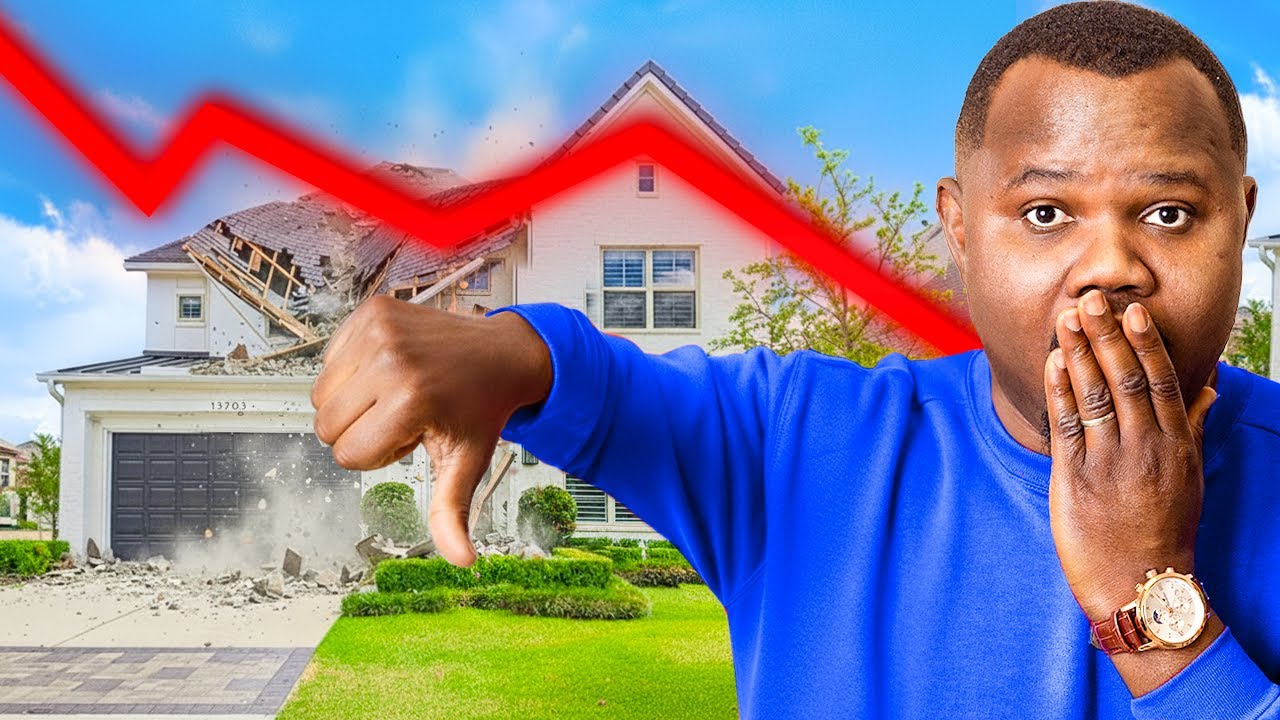
If you own a home and you are about to move, this is one of the biggest money decisions you will make:
Should you sell the property now, or keep it as a rental?
Most homeowners make this decision emotionally. They think about convenience, not math. They think about the hassle, not the long-term return. And that is exactly how people leave serious money on the table.
In the right situation, keeping your current home as a rental can produce far more wealth than selling it today. Not because of one single factor, but because of a stack of returns working together at the same time: cash flow, equity growth, appreciation, tax benefits, and future leverage.
That said, this is not universal advice. Some properties should absolutely be sold. Some should be kept. The key is using a clean formula instead of guessing.
This article breaks down the rent vs. sell formula, shows how a homeowner could potentially create an extra $130,000+ over time, and explains the market and tax factors you need to evaluate before making the call.
The first question is:
Is this property worth keeping?
That is a very different question.
A lot of people assume renting is always smarter because “real estate goes up.” That is lazy thinking. A weak property in a weak location with weak rent demand is not a wealth strategy. It is just a headache you are postponing.
The right decision depends on five things:
Your immediate net proceeds if you sell
Your monthly cash flow if you rent
Your long-term appreciation potential
Your tax position
Your return on equity compared to other options
If you do not run those five filters, you are not making an investment decision. You are just reacting.
The Houston market is not the same market it was during the frenzy years.
Houston’s February 2026 housing data showed that the median home price declined 1.5% year over year to $320,000, while inventory remained elevated enough that HAR described the broader market as having returned to balance in 2025. HAR also reported that Houston rental inventory hit record highs, giving renters more choices while prices remained relatively steady.
That matters for your decision.
Why?
Because in a slower or more balanced market, many homeowners will not get the massive premium they think they will get by selling. At the same time, strong rental demand can still make holding attractive in the right neighborhood. HAR reported in its August 2025 rental update that active rental listings exceeded 10,000 units, the highest on record, while the average lease price held at $2,412 and single-family home leases rose 3.1% year over year.
So the lazy advice of “just sell and cash out” does not automatically hold up.
In many cases, the better move is to hold a good property and let the asset keep working.
Here is the formula in plain English.
Net proceeds today
Annual cash flow + principal paydown + appreciation + tax benefits + future leverage options
That is the real comparison.
Not sale price versus rent.
Net proceeds today versus total future wealth creation.
That distinction is everything.
Let’s use a realistic version of the scenario you outlined.
Assume you own a newer duplex in Houston.
Purchase price: $455,000
Current value: $495,000
Loan amount at purchase: $432,250
Interest rate: 6.5% fixed
Monthly PITI: $3,270
Gross monthly rent: $3,950
Monthly cash flow: about $420
Annual cash flow: about $5,040
Now let’s compare the two paths.
If you sell around today’s appraised value, you may have around $40,000 in equity gain from appreciation. But you do not keep all of that.
You still have to account for:
Agent commissions
Seller closing costs
Title costs
Possible repairs or concessions
Mortgage payoff
Moving friction
Possible tax consequences depending on whether it is still your primary residence or already converted to rental
If the selling costs eat up around $20,000, your real net might be much smaller than the headline number.
And this is where people fool themselves.
They think, “I made money.”
Maybe. But if the property was producing cash flow and still had room to appreciate, selling may cut off a much bigger future return.
Also, if the property is your main home, you may be able to exclude up to $250,000 of gain if single or $500,000 if married filing jointly, assuming you meet the IRS ownership and use tests. That is a major factor in the rent-vs-sell decision, especially if you are near the end of the window where you still qualify.
That is one of the biggest pieces people miss.
Holding longer can create more upside, but waiting too long can also affect the tax treatment of a primary-residence sale. That is why timing matters.
Now assume you keep the property for five more years.
Here is where the wealth stack starts to matter.
At $420 per month, you are producing roughly $5,040 per year in cash flow.
Over five years, that is about:
$25,200 in cash flow
That is the easy part.
No serious person should promise appreciation. But if the property is in a neighborhood with durable demand and grows at a modest pace over time, the gain can be meaningful.
If a $495,000 property appreciates at roughly 4% annually, the value after five years would be about $602,000, which is roughly $107,000 above the starting value. That is a projection, not a guarantee. I am using it to show the math, not to promise an outcome. The broad Houston market has recently been flatter than that, with HAR’s February 2026 data showing median prices down year over year, so local zip code performance matters much more than citywide averages.
Even if appreciation is lower than 4%, there may still be meaningful long-term upside.
Part of every mortgage payment reduces your loan balance. On a 30-year amortizing loan, that creates equity quietly in the background. For residential rental property, the lender does not care whether you call it “forced savings” or “equity buildup.” It is still real wealth accumulation.
If you convert the property to a rental, you may be able to deduct many ordinary and necessary rental expenses, and residential rental property is generally depreciated over 27.5 years under MACRS. IRS Publication 527 confirms that residential rental property is generally depreciated over 27.5 years, and rental owners can deduct qualifying expenses connected to producing rental income.
That means the property may reduce your taxable rental income, and in some cases may create broader planning opportunities depending on your income, tax status, and whether you materially qualify under more advanced rules.
If you hold the property and keep building equity, you may later refinance or use a HELOC to redeploy capital. Borrowed funds are generally not taxable income because they are debt, not earnings. That is one reason real estate investors often prefer to access equity through borrowing rather than selling too early.
That future option has value.
And most homeowners do not price that option in when they are deciding whether to sell.
Here is a reasonable way to frame that headline.
Using the sample property over five years:
Cash flow: about $25,200
Appreciation projection: about $107,000
Total before counting principal paydown and tax benefits: about $132,200
That is where the “extra $130,000” type of outcome can come from.
Not from fantasy.
Not from guru hype.
From the combination of cash flow + appreciation alone.
And that still excludes:
Loan paydown
Depreciation value
Future refinancing flexibility
Potential rent growth
Now, blunt truth: this number is a scenario, not a guarantee. If appreciation is flat, the return is lower. If maintenance spikes, the return is lower. If the property sits vacant, the return is lower. If the neighborhood weakens, the thesis changes.
That is why the title works as a hook, but the body needs honesty.
This is where bad advice spreads fast.
A lot of people say, “Just rent it and write everything off.”
That is sloppy.
Here is the cleaner version.
If your home becomes a rental, you may generally deduct qualifying rental expenses such as mortgage interest allocable to the rental, property taxes, repairs, insurance, management, and other ordinary rental costs. IRS guidance also confirms that interest incurred to produce rents or royalties is generally deducted through the rental rules rather than as personal mortgage interest.
You may also depreciate the building over 27.5 years, but not the land.
If you later sell a former primary residence, the capital gains rules can get more complicated, especially if you have rented it out for years, claimed depreciation, or no longer meet the main-home exclusion requirements. IRS Topic 701 and Publication 523 are essential here.
So yes, rentals have tax advantages.
But no, this is not the kind of decision you should make from YouTube comments and vibes.
You should strongly consider selling if:
If you need the cash for a better investment, debt cleanup, a business move, or a strategic relocation, selling may be the right call.
A property in a declining or high-risk pocket can become dead equity fast. Market-specific factors like flood exposure, oversupply, crime shifts, insurance pressure, and weak tenant demand matter much more than generic “real estate always wins” talk.
If you have a large amount of trapped equity but the property is producing mediocre cash flow, you may be better off selling or restructuring. Every dollar of equity should be working. Dead equity is lazy capital.
This is a real factor. A good rental can still be the wrong investment for someone who will manage it badly, resent it, or ignore it.
This one is huge. If the sale qualifies for the Section 121 exclusion and waiting could reduce or complicate that benefit, selling now may be smarter than squeezing a little extra rent out of the property.
You should seriously consider holding if:
Not “it might cash flow if nothing breaks.”
Actual cash flow.
A newer home or duplex can make a much stronger first rental because repair risk is lower.
Houston is not one market. A strong suburban or job-linked area with stable demand is very different from a location with weak fundamentals.
Selling creates a one-time event.
Holding creates a compounding machine.
Keeping the property preserves the option to refinance, pull equity, or use the asset in a broader portfolio strategy.
This is the piece most people never calculate.
Let’s say your property has grown a lot in value. Great. But if your cash flow is now weak relative to how much equity is trapped inside, that property may not be performing as well as you think.
That is where return on equity matters.
A property with strong appreciation history but weak forward returns can become a vanity asset. It looks rich on paper but does not work hard enough.
Sometimes the smarter move is not “sell versus keep.”
Sometimes the smarter move is:
Keep it and use a HELOC strategically
Refinance and redeploy capital
Sell and exchange into a stronger market
Convert one property into two better ones
That is real strategy.
Sometimes the best financial move is not the best personal move.
If owning the property is stressing you out, if you hate the idea of managing tenants, or if you are moving into a season of life where simplicity matters more than maximizing yield, selling can still be the right decision.
Money matters.
But peace matters too.
Just do not confuse burnout with strategy.
And do not sell a strong asset just because you have not built a proper system around it.
Use this filter:
You need immediate liquidity
The market or neighborhood outlook is weak
The return on equity is poor
You do not want landlord responsibilities
The primary residence tax exclusion strongly favors selling now
It cash flows today
It is in a strong rental location
It has low near-term maintenance risk
You value long-term appreciation and loan paydown
You want future tax deductions and leverage options
The biggest mistake homeowners make is looking only at the check they would get from selling.
That is amateur math.
The better question is:
How much future wealth am I giving up if I sell this asset today?
In the right case, the answer can be well over $130,000 over the next several years from the combined effect of cash flow and appreciation alone. Add principal paydown, tax benefits, and future leverage, and the difference can get even bigger.
But this only works if the property is actually good.
A bad property does not become a great investment just because you decided to keep it.
That is why the real formula is this:
Sell if the capital can work harder elsewhere. Keep it if the asset still has strong long-term economics.
That is the decision.
Not emotion.
Not fear.
Not “my friend said renting is passive income.”
Math first. Strategy second. Emotion last.
Wale Lawal
Real Estate Investor & Broker
Call or Text: 832-776-9582
Email: Wale@NetworthBuilders.com




 Erase note
 You currently have no custom folders