Sign In
Create an account and enjoy all the benefits of HAR.com!
Sign In
Sign in using social account


A Complete Guide to Understanding Where You Are and How to Level Up
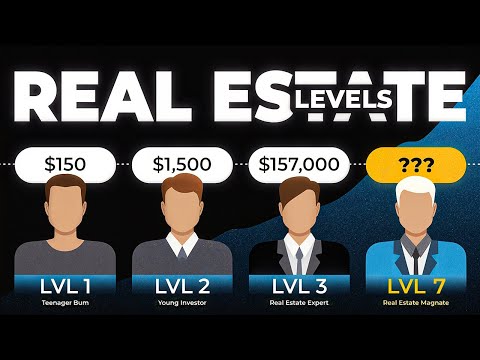
There are several levels of real estate investors.
On one end, you have people who dream about investing but never buy a property.
On the other end, you have professional investors building generational wealth every month.
The surprising part?
Most people get stuck somewhere in the middle.
They buy random properties without ever understanding what level they are actually playing at.
If you understand the seven levels of real estate investors, you can immediately identify:
Where you are today
Why you feel stuck
What it takes to move to the next level
This clarity alone can change your entire investing journey.
If you're meeting me for the first time, my name is Wale Lawal, a Houston-based real estate investor and broker. I’ve built a seven-figure rental portfolio with over 30 rental units and helped 400+ investors across the country start or scale their real estate portfolios.
Let’s break down the seven levels of real estate investors, from beginners to advanced wealth builders.
Every investor starts here.
The Observer is someone who is fascinated by real estate but hasn’t taken action yet.
At this stage, you might be:
Watching real estate videos on YouTube
Scrolling Zillow or Redfin listings
Listening to real estate podcasts
Thinking “one day I’ll start investing”
You have interest.
You have curiosity.
But you are held back by:
Fear
Confusion
Lack of a roadmap
You are not investing money yet.
But you are investing attention.
Set one simple goal this month:
Speak with a lender
Talk to an investor-friendly agent
Learn how real estate financing works
Small action breaks the freeze.
The Analyzer has moved beyond dreaming.
Now you’re researching everything.
You might be studying:
Rental property investing
House flipping
Wholesaling
Short-term rentals
BRRRR strategy
Multifamily investing
At this stage, you’re learning important investing terms like:
Cash flow
Cap rate
Cash-on-cash return
Rent-to-price ratio
Appreciation
Debt service coverage
But this stage comes with a huge risk.
Many people stay here for years.
They overthink every detail.
They try to master every strategy instead of choosing one.
Define your buy box:
One city
One property type
One price range
One strategy
Clarity creates momentum.
Congratulations.
You bought your first property.
You are now officially a real estate investor.
Your first deal might be:
A single-family rental
A duplex house hack
A small multifamily property
But this stage comes with a steep learning curve.
You start learning about:
Property management
Tenant screening
Repairs and maintenance
Lease agreements
Insurance and taxes
Your first property will not make you rich.
Its real job is education.
Survive the learning curve.
Once you do, you move to the next stage.
At Level 4, you’ve caught the investing bug.
You’re no longer experimenting.
You are intentionally building monthly income through rental properties.
Typical investors here:
Own multiple rental properties
Understand tenant screening
Have systems for property management
Focus on consistent cash flow
Many people at this level still work full-time jobs.
They may be:
Doctors
Engineers
Tech workers
Business owners
They are building passive income alongside their careers.
Grow your portfolio safely while maintaining strong reserves.
Cash flow protects you during market changes.
Liquidity saves you during downturns.
This is where skills begin replacing luck.
The Value-Add Investor forces equity into properties through improvements.
Strategies here often include:
BRRRR (Buy, Rehab, Rent, Refinance, Repeat)
Renovations
Strategic upgrades
Property repositioning
Instead of waiting for appreciation, investors create value themselves.
At this level, properties are no longer hobbies.
They are business assets.
Buying the cheapest property in the cheapest neighborhood rarely works.
Cheap properties often come with:
Foundation issues
Plumbing failures
Roof problems
Problem tenants
One bad repair can wipe out an entire year of profits.
Successful investors eventually learn to prioritize:
Location over price.
Now you are playing a different game.
The Scaler is focused on growth and systems.
Investors at this level often:
Buy multiple properties each year
Acquire small apartment complexes
Develop build-to-rent communities
Work with multiple lenders
Build teams and systems
Scaling investors understand that random wins are dangerous.
They build repeatable systems.
Speed without structure.
Scaling too quickly can destroy portfolios.
Successful investors only scale when:
Systems are in place
Property management is stable
Capital reserves are strong
This is the highest level of real estate investing.
At this stage, investing is no longer about owning doors.
It is about designing wealth systems.
Level 7 investors typically:
Raise capital from investors
Build large developments
Own multifamily portfolios
Develop build-to-rent communities
Manage asset managers and property managers
They are no longer involved in daily operations.
Their focus shifts to:
Portfolio structure
Asset quality
Long-term wealth preservation
They are building assets that outlive them.
This is how generational wealth is created.
The biggest mistake investors make is trying to operate at the wrong level.
For example:
An analyzer trying to act like a developer.
Or a first-time investor trying to scale too fast.
The real key is simple:
Know your level.
Then focus only on the actions that move you to the next level.
Every real estate investor starts at Level 1.
Even the investors building billion-dollar portfolios once started by watching listings online.
The difference between dreamers and wealth builders is not intelligence.
It is action and progression through the levels.
The goal is not to rush.
The goal is to move forward intentionally.
Observer → Analyzer → First Deal → Cash Flow → Value Creation → Scaling → Wealth Architecture.
When you understand this path, real estate investing becomes much clearer.
And your next step becomes obvious.
Call or Text: 832-776-9582
Email: Wale@NetworthBuilders.com
If you want help identifying your current investing level and building a strategy to move forward, feel free to reach out. The right roadmap can shorten your investing journey by years.




 Erase note
 You currently have no custom folders