Sign In
Create an account and enjoy all the benefits of HAR.com!
Sign In
Sign in using social account


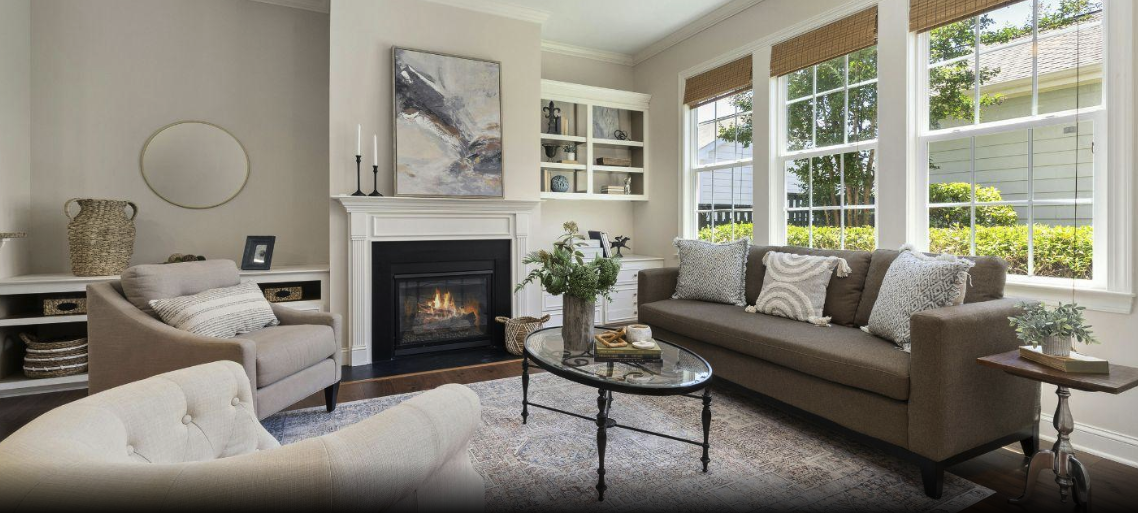
Walk into one home and it can feel surprisingly spacious, even if its square footage is modest. Step into another home that is technically larger, and it may somehow feel cramped. What gives?
The answer often has less to do with the number on the listing and more to do with how the space is designed. Natural light, ceiling height, furniture placement, color and even the way your eyes move through a room can influence how large a home feels.
For buyers, understanding these visual tricks can help you look beyond square footage when touring homes. For homeowners and sellers, they can offer simple ways to make existing spaces feel more open without adding an expensive addition.
A dark room can feel smaller because shadows visually define the room's boundaries. A bright room, on the other hand, tends to feel more open.
That is one reason natural light can have such a dramatic effect. Large windows, glass doors and strategically placed windows can allow daylight to travel farther into a home. The U.S. Department of Energy notes that thoughtful window placement can maximize natural daylight while also helping homeowners manage glare and heat.
Mirrors can also help. Positioned strategically, particularly where they can reflect a window or another light source, they can bounce light around the room and create the illusion of additional depth.
Ceiling height is another major factor in how spacious a room feels. A tall ceiling gives the eye more vertical space to take in, which can make the entire room seem larger.
You do not necessarily need a dramatic vaulted ceiling to create this effect. Floor-to-ceiling curtains, tall bookcases, vertical artwork and cabinets that extend upward can draw attention toward the ceiling.
This is something you will see in many newer homes across the region. Current Houston listings frequently highlight open layouts, high or soaring ceilings and abundant natural light as features that contribute to an expansive feel.
A common instinct in a small room is to use lots of small furniture. Surprisingly, that can make the room feel even more crowded.
Instead, focus on proportion and purpose.
The goal is not to make everything tiny. It is to give the eye some breathing room.
Rooms tend to feel larger when your eyes can travel through them without constantly running into visual barriers.
An open-concept kitchen, dining and living area can create this effect by connecting several functions into one continuous sightline. Even in a home with traditional rooms, arranging furniture so that doorways, windows and adjoining spaces remain visible can make the layout feel more connected.
Decluttering has a similar effect. When countertops, floors and other surfaces are overloaded with belongings, the eye has more objects to process, making the space feel busier and potentially smaller.
Color can also influence how the eye perceives a room. Light and relatively consistent colors can make walls, ceilings and other surfaces feel less visually segmented.
That does not mean every small room needs to be white. Designers increasingly use everything from soft neutrals to deeper, dramatic colors to create a more cohesive look. The bigger idea is continuity. When there are fewer strong visual breaks, the boundaries of a room can become less obvious.
Flooring can work the same way. Using consistent flooring across adjoining spaces can help them read as one larger area rather than several separate zones.
You cannot create additional square footage with a mirror or a coat of paint, but you can change how that square footage feels. Whether you are shopping for a home or preparing one for sale, pay attention to the things that influence perception: light, ceiling height, furniture scale, sightlines, and visual clutter. Sometimes the home that feels biggest is not the one with the most square feet. It is the one that makes the best use of what it already has.
Natural light, high ceilings, open sightlines, appropriately sized furniture, minimal visual clutter, and consistent colors can all make a home feel more spacious than its actual square footage.
Use furniture that fits the room, keep walkways clear, maximize natural and layered lighting, add a strategically placed mirror, and avoid overcrowding the space.
Yes. Higher ceilings can increase the sense of vertical space, while features such as tall curtains, vertical artwork, and floor-to-ceiling cabinetry can draw the eye upward and make a room feel more expansive.


 Erase note
 You currently have no custom folders