Sign In
Create an account and enjoy all the benefits of HAR.com!
Sign In
Sign in using social account


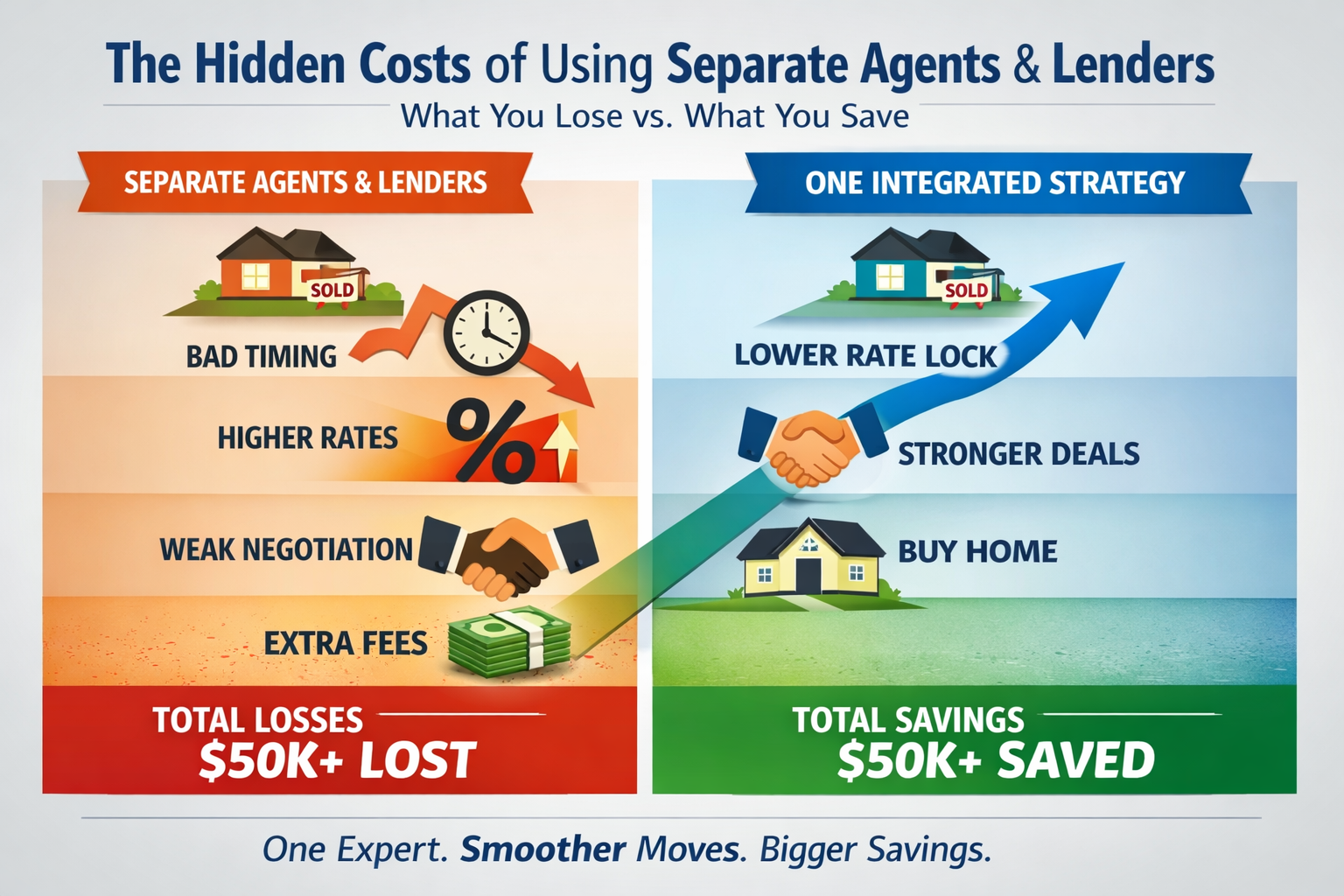
Most people think the cost of moving comes down to commission and interest rate. In reality, the biggest losses happen in the handoff between selling a home and buying the next one.
When real estate agents and mortgage lenders work separately, timing gaps form. Those gaps create rushed decisions, weaker negotiations, higher rates, and unnecessary fees. Most clients never see these losses itemized, but they feel them long after closing.
1. Poor Timing Between Sale and Purchase
Selling too fast to meet a purchase deadline often leads to price reductions. Buying too early or too late can result in higher rates or missed opportunities. Even small timing errors can cost tens of thousands of dollars.
2. Mortgage Rate and Fee Leakage
When financing isn't coordinated with the transaction strategy, buyers often miss optimal lock windows, float-down opportunities, or lender credits. A difference of half a percent on a mortgage can quietly add up over time.
3. Weaker Negotiation Position
Negotiation is strongest when financing terms, contingencies, and seller timelines are fully understood. When these elements are fragmented across multiple parties, leverage is lost.
4. Redundant Costs and Delays
Misaligned appraisals, rushed disclosures, re-draws, or bridge solutions can add avoidable expenses and stress to the process.
When the same professional coordinates the sale, financing, and purchase, decisions are made holistically rather than in isolation. Pricing strategy supports financing. Financing supports negotiation. Timing supports both.
This approach doesn't just create convenience it creates measurable financial outcomes.
In a typical move-up scenario, clients often benefit from:
Stronger sale pricing through better timing
Improved mortgage terms through strategic rate management
Fewer closing cost surprises
Stronger negotiating leverage on the purchase
The combined impact often translates into tens of thousands of dollars preserved or gained over the life of the move.
Buying and selling a home is one of the largest financial transitions most families make. Treating each piece separately introduces friction and unnecessary loss. Treating it as a single financial strategy changes the outcome.
The goal isn't to do more.
The goal is to eliminate gaps.




 Erase note
 You currently have no custom folders