Sign In
Create an account and enjoy all the benefits of HAR.com!
Sign In
Sign in using social account


Pre-Approval
Home Search
Offer Accepted
Inspection
Appraisal
Final Walkthrough
Closing Day Preparation
Sending Closing Funds ← You Are Here
Homeownership
One of the most important conversations I have with buyers happens just before closing.
It has nothing to do with interest rates.
Nothing to do with inspections.
Nothing to do with negotiations.
It's about protecting their money.
Real estate transactions involve large financial transfers, which unfortunately makes them attractive targets for criminals attempting to commit wire fraud.
The good news?
With a few simple habits, you can dramatically reduce your risk.
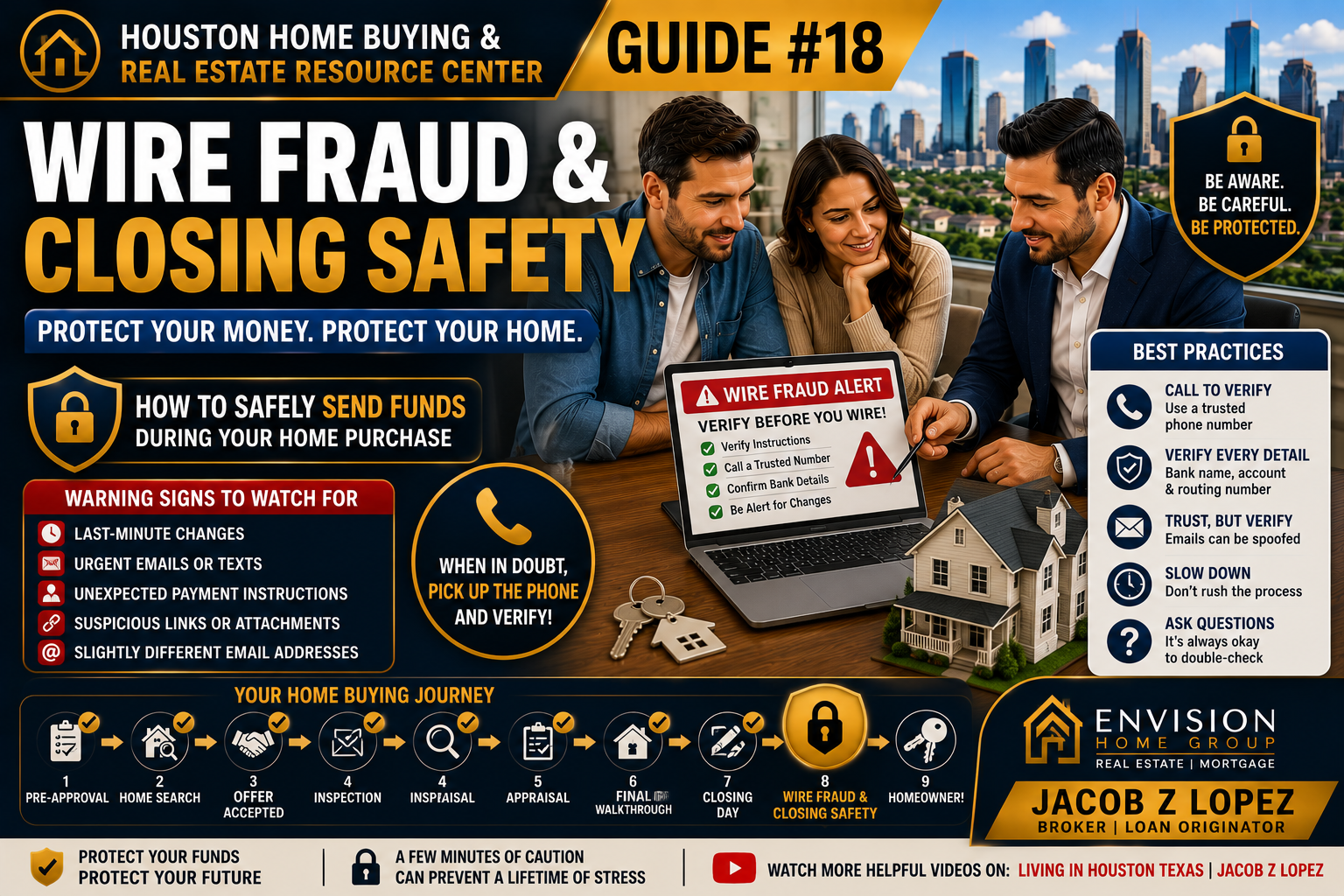
The safest approach is simple:
Never send money based solely on an email, text message, or unexpected phone call.
Always independently verify wiring instructions using a trusted phone number you already have for your title company or closing professional.
If anything seems unusual, pause the transaction until you've confirmed the information.
It's always better to spend a few extra minutes verifying than to rush.
Criminals sometimes attempt to impersonate legitimate companies involved in a real estate transaction.
They may send messages that appear convincing, using company logos, professional language, and email addresses that look very similar to the real ones.
Their goal is to convince buyers to send funds to the wrong account before anyone realizes what happened.
Awareness is one of the best defenses.
One of the things I emphasize with every client is this:
If something feels unusual, stop and call.
I've never had a client regret taking five extra minutes to verify instructions.
I have, however, seen buyers become understandably anxious after receiving unexpected emails that looked legitimate.
Fortunately, those situations were resolved simply because they paused before taking action.
I would much rather answer one extra phone call than have a client wonder if something is legitimate.
Be cautious if you receive:
Any one of these doesn't automatically mean fraud—but it does mean it's time to verify.
I encourage every buyer to follow these steps:
Use a trusted phone number you've previously verified—not the number included in a suspicious email.
Confirm:
Never assume an email is legitimate simply because it looks professional.
If anything doesn't make sense, ask.
There is no such thing as a bad question when you're protecting your finances.
Scammers often rely on urgency.
Taking your time is one of your greatest protections.
Title companies throughout Texas invest significant time educating buyers about wire fraud because awareness is one of the strongest forms of prevention.
You'll often receive safety reminders from multiple members of your home-buying team.
Pay attention to them.
They're there to protect you.
Before sending funds, ask yourself:
If the answer to any of those questions is "I'm not sure," pause and verify before moving forward.
Imagine two buyers preparing to wire their closing funds.
Buyer A receives an unexpected email with revised instructions and immediately sends the money.
Buyer B receives a similar email but pauses and calls the title company using the phone number already saved in their contacts.
The title company confirms the email wasn't legitimate.
One simple phone call prevented a costly mistake.
I recommend saving your title company's verified phone number in your contacts as soon as you go under contract.
That way, if you ever have questions about wiring instructions or closing funds, you'll already have a trusted number available.
It's a small step that can provide tremendous peace of mind.
Many title companies provide wire fraud awareness information during the closing process.
Email is a useful communication tool, but buyers should independently verify wiring instructions before sending funds.
Pause immediately and contact your title company, lender, or real estate professional using trusted contact information you already have.
Closing procedures vary by title company and transaction size. Ask your closing team what payment methods are accepted for your specific transaction.
Guides #1–#17
Guide #19 — Understanding Title Insurance
Guide #20 — Your First 30 Days as a Homeowner
Guide #21 — Texas Homestead Exemption Explained
The Living in Houston Texas Jacob Z Lopez YouTube channel features practical home-buying education, neighborhood tours, and real-world advice to help buyers confidently navigate every stage of the process. As the Academy continues to grow, companion videos will walk through topics like closing, inspections, financing, and homeowner tips in an easy-to-follow format.
Protecting your money is just as important as finding the right home.
If you're buying in the Greater Houston area, I'll help coordinate with your lender and title company, answer your questions, and make sure you understand every step before sending your closing funds.
Buying a home should be exciting—not stressful. My goal is to help you enjoy the experience while staying informed and protected.
Jacob Lopez is a Houston real estate broker and mortgage loan originator who helps buyers throughout the Greater Houston area navigate every stage of the home-buying journey with confidence. Through Envision Home Group and the Houston Home Buying & Real Estate Resource Center, he provides practical education, local expertise, and personalized guidance so clients can make informed real estate decisions.


 Erase note
 You currently have no custom folders