Sign In
Create an account and enjoy all the benefits of HAR.com!
Sign In
Sign in using social account


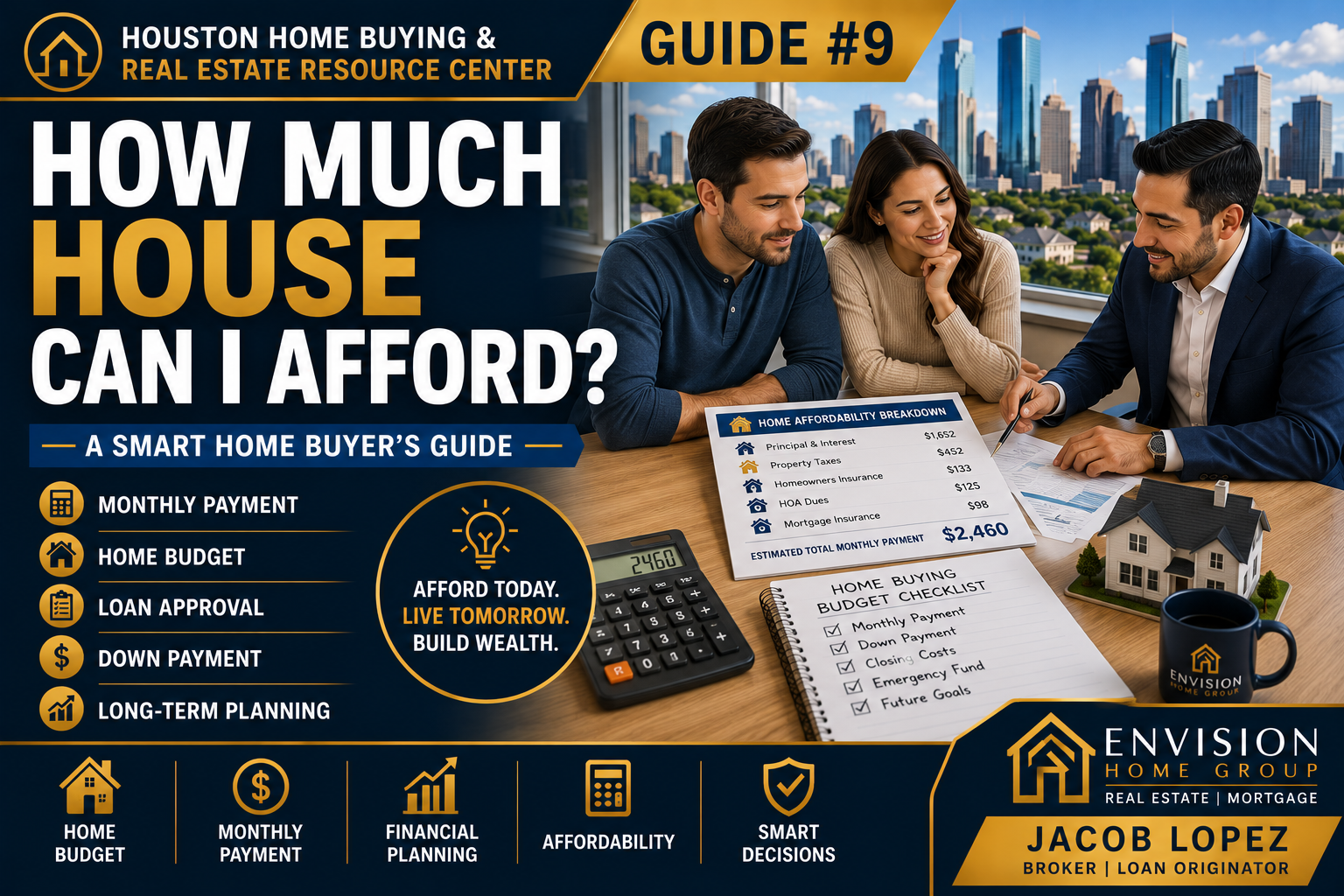
One of the biggest misconceptions I hear from buyers is:
"If I'm approved for it, I can afford it."
Approval and affordability are related, but they are not the same thing.
A lender determines the maximum amount you may qualify to borrow based on established lending guidelines. That doesn't necessarily reflect the monthly payment that best fits your lifestyle, savings goals, or long-term financial plans.
In my experience, the happiest homeowners are often the ones who purchase a home they can comfortably afford rather than stretching to their maximum approval amount.
This guide will help you think beyond the loan approval letter and build a home-buying budget that supports your life after closing.
Affordability isn't determined by one number.
Instead, I encourage buyers to evaluate:
A monthly payment they're genuinely comfortable with.
Their current income and recurring expenses.
Savings remaining after closing.
Property taxes.
Homeowners insurance.
HOA dues.
Utilities and maintenance.
Future financial goals.
Emergency savings.
The goal isn't to buy the most expensive house.
The goal is to buy a home that supports your lifestyle while allowing you to continue building wealth.
Buying a home is one of the largest financial decisions most people will ever make.
Choosing the wrong monthly payment can affect far more than your housing budget.
It can influence your ability to:
Travel
Save for retirement
Invest
Handle unexpected repairs
Enjoy hobbies
Build an emergency fund
Prepare for future family goals
That's why I believe affordability should begin with your life—not the lender's maximum approval amount.
One of the first conversations I have with buyers isn't:
"How much do you qualify for?"
Instead I ask:
"What monthly payment would allow you to still enjoy your life?"
Sometimes buyers qualify for substantially more than they're comfortable spending.
Other buyers are surprised to learn they can comfortably afford more than they originally expected.
There isn't a universal answer.
The right budget is the one that lets you sleep well at night, continue saving for the future, and enjoy your new home without constant financial stress.
One of the most rewarding parts of my work is helping buyers create a plan that feels sustainable—not just possible.
A lender evaluates factors such as income, debts, credit, and loan guidelines to determine the maximum amount you may qualify to borrow.
Affordability adds additional considerations, including:
Lifestyle
Savings goals
Family plans
Monthly flexibility
Future expenses
Personal comfort level
Think of qualification as a ceiling.
Affordability is the number that feels right for your life.
When comparing homes, I encourage buyers to focus on the complete monthly payment instead of only the listing price.
That monthly payment may include:
Principal
Interest
Property taxes
Homeowners insurance
HOA dues (if applicable)
Mortgage insurance (when required)
Two homes with similar purchase prices can have noticeably different monthly payments depending on these factors.
Before choosing a price range, ask yourself:
What monthly payment feels comfortable?
How much do I want to put down?
How much cash should remain after closing?
Do I want to continue traveling?
Do I enjoy dining out?
Am I saving for children or college?
Do I plan to invest?
Emergency fund
Retirement contributions
Vehicle expenses
Future maintenance
A home should fit within your life—not become your entire financial life.
Imagine two buyers who each qualify to purchase a $500,000 home.
Buyer A chooses a home at the top of that range and has very little flexibility left in their monthly budget.
Buyer B purchases a $425,000 home, keeps additional savings after closing, continues investing, takes family vacations, and comfortably handles unexpected repairs.
Neither decision is inherently right or wrong, but Buyer B created more financial breathing room.
The best home isn't always the most expensive one you can purchase.
One exercise I encourage buyers to do is this:
Before purchasing a home, pretend you've been making your estimated mortgage payment for three months.
Transfer the difference between your current housing expense and your projected mortgage payment into savings each month.
If that budget feels comfortable, you'll have greater confidence in your home purchase—and you'll likely build additional savings before closing.
It's a simple way to test your future payment before committing to it.
Shopping at the top of their approval range.
Forgetting about taxes, insurance, and HOA dues.
Spending every dollar on the down payment.
Not leaving an emergency fund.
Comparing only purchase prices instead of total monthly costs.
Underestimating future maintenance expenses.
Not necessarily. Many buyers prefer to purchase below their maximum approval amount to maintain greater financial flexibility.
There's no one-size-fits-all answer, but maintaining an emergency fund and avoiding the use of every available dollar for your purchase can provide valuable peace of mind.
A larger down payment can reduce the loan amount, but preserving cash for emergencies and future goals may also be important. The right balance depends on your overall financial situation.
They are part of your total monthly housing cost. Two similarly priced homes can have very different monthly payments because of taxes, insurance, and HOA dues.
Completed Guides
? Guide #1 — Best Houston Suburbs for First-Time Home Buyers
? Guide #2 — Should You Buy New Construction?
? Guide #3 — Best Areas Near Houston for Families Under $400K
? Guide #4 — How Seller Concessions Work in Texas
? Guide #5 — Hidden Costs of Buying a Home in Texas
? Guide #6 — What to Know Before Hiring a Real Estate Broker
? Guide #7 — Houston Property Taxes Explained
? Guide #8 — FHA vs. Conventional Loans in Texas
Next Recommended Guides
→ Guide #10 — The Complete Houston Relocation Guide
→ Guide #11 — The Complete Home Inspection Guide
→ Guide #12 — New Construction Builder Incentives Explained
Each guide builds upon the last, giving you the knowledge to make confident, informed decisions throughout your home-buying journey.
Buying a home should support your goals not limit them.
If you're preparing to purchase in the Greater Houston area, I'd be happy to help you compare financing scenarios, estimate your monthly payment, review your budget, and create a personalized affordability plan before you begin touring homes.
A Buyer Strategy Session is designed to help you make one of life's biggest financial decisions with confidence and clarity.
Jacob Lopez is a Houston real estate broker and mortgage loan originator who helps buyers and sellers throughout the Greater Houston area make informed real estate decisions through education, transparency, and personalized guidance.
The Houston Home Buying & Real Estate Resource Center is an educational library designed to answer the most common questions about buying, selling, and investing in Houston real estate. Every guide builds upon the last, helping readers become knowledgeable, confident homeowners.


 Erase note
 You currently have no custom folders