Sign In
Create an account and enjoy all the benefits of HAR.com!
Sign In
Sign in using social account


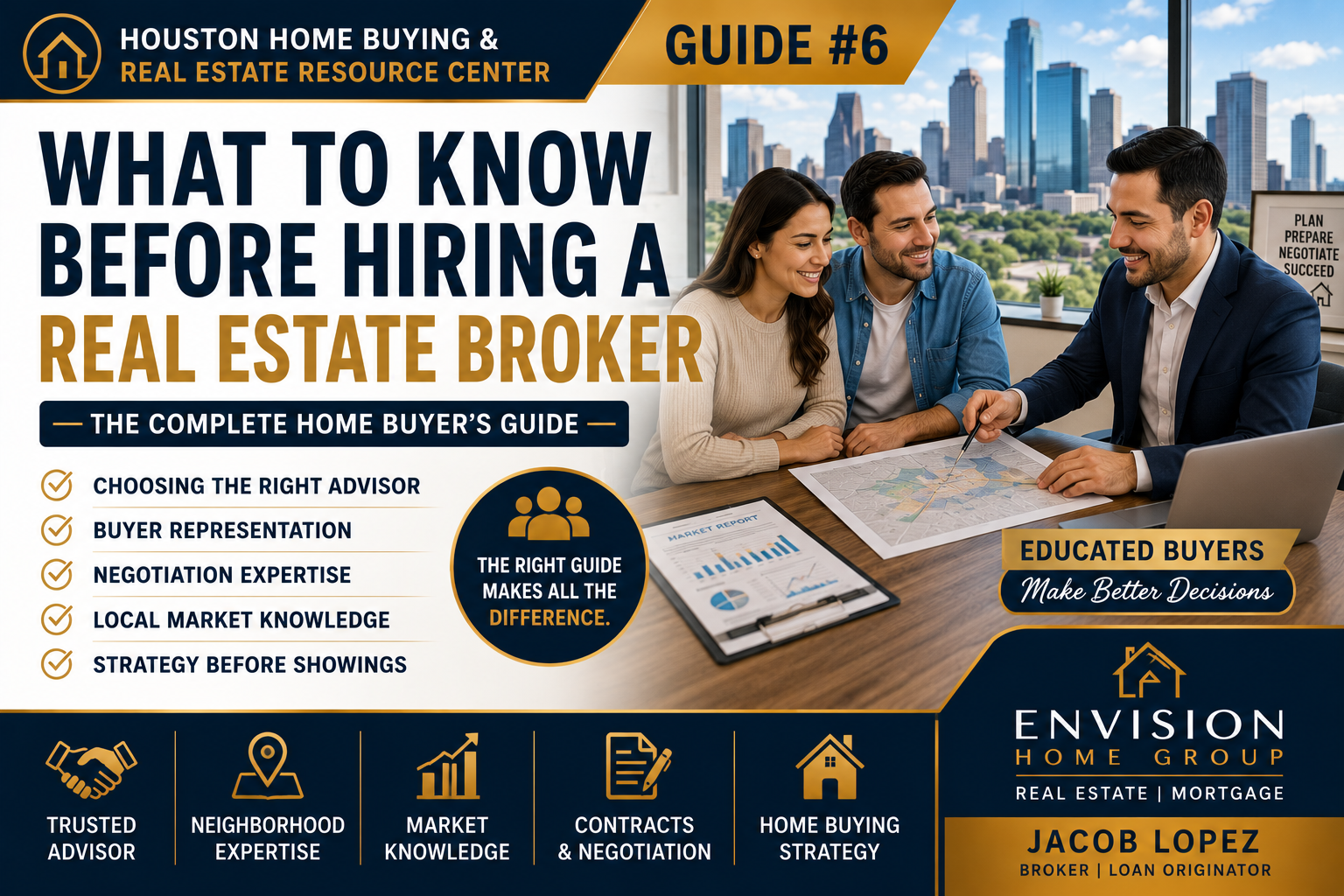
When most people begin searching for a home, they spend hours comparing neighborhoods, scrolling through listings, and visiting open houses.
Very few spend the same amount of time deciding who should represent them.
Ironically, the professional you choose to guide you through the process can have just as much influence on your experience as the home you ultimately purchase.
A knowledgeable broker can help you understand the market, negotiate effectively, identify potential risks, coordinate with lenders, inspectors, title companies, and builders, and keep the transaction moving from contract to closing.
The goal isn't simply to buy a house.
It's to make a confident financial decision with someone you trust by your side.
In this guide, I'll explain what a real estate broker does, what questions to ask before hiring one, and how to determine whether a broker is the right fit for your goals.
A great real estate broker does much more than schedule showings.
The right broker should help you:
Develop a home-buying strategy.
Understand your financing options.
Compare neighborhoods objectively.
Evaluate resale potential.
Negotiate favorable contract terms.
Coordinate inspections and important deadlines.
Communicate clearly throughout the transaction.
Advocate for your best interests from beginning to end.
Buying a home is one of the largest financial decisions most people will ever make. Your broker should act as an advisor not simply someone who opens doors.
Every home purchase involves dozens of decisions, deadlines, and moving parts.
Questions often come up like:
Is this home priced appropriately?
Should we ask for seller concessions?
What happens if the inspection reveals issues?
Is new construction actually a better value?
How do property taxes affect my monthly payment?
Is this neighborhood likely to appreciate over time?
These are questions that require experience, market knowledge, and thoughtful guidance.
Having someone who helps you understand your options not simply tells you what to do can make the process far less stressful.
One of the things I enjoy most about helping buyers is seeing their confidence grow.
Many clients come into our first meeting feeling overwhelmed.
There are dozens of neighborhoods to compare, financing options to understand, contracts to review, and timelines to manage.
My philosophy has always been simple:
An educated buyer makes better decisions.
That's why I spend a significant portion of our Buyer Strategy Session answering questions before we ever schedule a showing.
When buyers understand the process, they're able to make decisions with confidence instead of reacting emotionally.
One of the most rewarding parts of my job is hearing clients say they felt informed, supported, and never pressured throughout the experience.
To me, that's what professional representation should feel like.
Not every buyer has the same priorities, so there isn't a universal checklist. However, I recommend asking questions such as:
How do you help buyers narrow down neighborhoods?
What's your communication style during the transaction?
How do you negotiate on behalf of your clients?
Do you have experience with new construction?
Can you explain financing options or coordinate with lenders?
How do you handle inspections and repair negotiations?
What happens if we encounter unexpected challenges?
The answers to these questions often reveal more than years of experience alone.
After years in real estate, I've come to believe the best brokers consistently demonstrate these qualities:
A good broker asks thoughtful questions before suggesting homes.
Understanding your goals comes before searching for properties.
Buying a home should never feel rushed.
Your broker should explain your options clearly so you can make informed decisions.
Whether it's good news or a challenge that needs attention, timely communication builds confidence throughout the transaction.
Buying a home isn't just about the sales price.
Monthly payments, taxes, insurance, HOA fees, closing costs, and long-term affordability all deserve thoughtful consideration.
The relationship shouldn't end when you receive the keys.
Whether you need contractor recommendations, refinancing guidance, or simply have questions months later, your broker should remain a trusted resource.
Not at all.
Every professional has a different communication style, level of experience, market knowledge, and approach to client service.
While agency relationships vary, buyers should clearly understand who each professional represents and whose interests they are advocating for throughout the transaction.
Builder sales consultants represent the builder.
Having your own representation can help you compare builders, understand contracts, evaluate incentives, and make informed decisions.
Consider asking additional questions if a broker:
Pushes you toward homes before understanding your goals.
Struggles to explain the buying process clearly.
Is difficult to reach or slow to communicate.
Focuses primarily on closing the transaction rather than educating you.
Avoids discussing financing, resale, or long-term planning.
Buying a home is too important to feel rushed or uninformed.
One of the best questions you can ask a potential broker is:
"What does your process look like before we ever tour our first home?"
The answer tells you a great deal about how they work.
Personally, I believe the strongest home purchases begin with a strategy not a showing appointment.
Taking time to understand your goals, budget, financing, and preferred lifestyle usually leads to better decisions and a smoother experience.
Compensation structures vary depending on the transaction, so it's important to discuss representation and any potential costs before beginning your home search.
A broker has additional education, licensing, and responsibilities beyond those required for a real estate salesperson or sales agent. Specific roles vary by brokerage and state regulations.
Many buyers find it helpful to speak with more than one professional before deciding who they feel most comfortable working with.
You can still have your own representation. In fact, many buyers appreciate having someone independent to help them compare builders, contracts, incentives, and financing options.
Completed Guides
? Guide #1 — Best Houston Suburbs for First-Time Home Buyers
? Guide #2 — Should You Buy New Construction?
? Guide #3 — Best Areas Near Houston for Families Under $400K
? Guide #4 — How Seller Concessions Work in Texas
? Guide #5 — Hidden Costs of Buying a Home in Texas
Next Recommended Guides
→ Guide #7 — Houston Property Taxes Explained
→ Guide #8 — FHA vs. Conventional Loans in Texas
→ Guide #9 — How Much House Can I Afford?
Each guide builds on the previous one, giving you the knowledge to make informed decisions throughout your home-buying journey.
Buying a home isn't just about finding the right property it's about having the right advisor by your side.
If you're thinking about buying in the Greater Houston area, I'd be happy to answer your questions, discuss your goals, explain your options, and help you create a personalized strategy before you begin touring homes.
Whether you're a first-time buyer, relocating to Texas, or comparing new construction with resale homes, my goal is to provide the education and guidance you need to move forward with confidence.
A Buyer Strategy Session is designed to help you understand your options before making one of the biggest financial decisions of your life.
Jacob Lopez is a Houston real estate broker and mortgage loan originator who helps buyers and sellers throughout the Greater Houston area make informed real estate decisions through education, transparency, and personalized guidance.
The Houston Home Buying & Real Estate Resource Center is an ongoing educational library designed to answer the most common questions about buying, selling, and investing in Houston real estate. Every guide builds upon the last, helping readers become more confident, informed homeowners.


 Erase note
 You currently have no custom folders