Sign In
Create an account and enjoy all the benefits of HAR.com!
Sign In
Sign in using social account


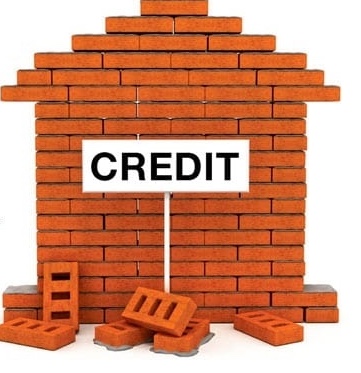
For a first time home buyer the process can seem like a decathlon. One of the most important events of the competition is credit. There is a lot of information out there, some true and some false, about credit as it pertains to home buying, so without further ado, let's jump in!
Q: There are a TON of credit scores and companies reporting them, which ones do I go by?
A: GREAT question. First things first, all these companies that report your credit scores such as Credit Karma, CreditWise, SmartCredit, your bank, etc, are just reporting someone else's information. They will all have the same numbers if they are using the same model. There are two models that are important in credit scores: Vantage and FICO. For the sake of time, we will briefly go over FICO. When you go to most loan officers for your pre-approval, they will give you 3 credit scores: one from Transunion which is the FICO 4 model, one from Experian which is the FICO 2 model, and one from Equifax which is the FICO 5 model. These scores are derived from a specific algorithm which is supposed to tell banks how likely you are to default on your loan(messed up huh?)! What banks then do is take the MIDDLE of these 3 scores and operate as if that is your credit score for buying a home!
Q: Okay, what score do I need to buy a home?
A: That depends on a whole host of other factors. For example, for an FHA loan, you will be told you need at least a 580, however, in my experience, you should be higher than 620. There are some banks that may approve you with as low as a 500 and a higher down payment which is why shopping banks should be vital to you if you are on the fence. For a conventional loan, you will hear as low as 620 but in practice, you are looking at more of a 660. If you are applying for a VA loan, credit score really is not all that important. USDA also has different requirements. To answer your question, the score you need is dependent on your situation! Where there is a will, there is a way!
Q: Are there any "landmines" that could stop me, from a credit standpoint, from getting a mortgage?
A: Sure. For example, if you have a 680, but have two late payments on your file from the past year, you will likely not get approved without a manual underwriting process. Rule of thumb, no late payments within 12 months of applying for a mortgage and also make sure you are working for at least 2 years straight with little to no job movement if possible. If you have a 680 and your credit card utilization is too high, that likely means your Debt-to-Income(DTI) is too high as well, and that will be a red flag. Currently it is fixable by, if you are able to, paying down your utilization, but once trending data kicks in, that will become more challenging! If you have collections, charge-offs, or other unpaid debts, you may find this more like Everest than a foothill. Reach out to an expert and go over your options!
Q: I do not have much credit, if any, can I buy a house?
A: From what we have been told, banks like to see 3 accounts minimum on a credit report. Usually at least one installment( auto loan, student loans, etc) and 1-2 revolving accounts(credit card, line of credit, etc) to prove you have the capability to pay your bills on time. After all, you are, in some cases, borrowing hundreds of thousands of dollars! If you do not have 3 accounts, a lot of times proof of payments that are not reported to a credit bureau can be used, such as car insurance, utility bills, or a phone bill! Do not go and report your utility payments to a credit bureau if they offer that program. That helps a certain credit model, but not the model that is used to determine mortgage eligibility!
In Conclusion...
Credit, outside of income, may be the most important indicator of whether or not you can purchase a home, depending on the loan you are trying to attain. Also, there is a big difference between credit scores when it comes to rates. For a starting point, every 20 points higher you will generally lower your interest rates. You may have a 710, but what if you had a 730? I have ran a successful national credit consulting and restoration company for over 4 years and worked for another one before that. I have seen it all and done it all and if there is one thing I can recommend to any and all, make sure you, at minimum, understand the impact this has on what you are trying to do, and if you do not, reach out and we will make ourselves available!




 Erase note
 You currently have no custom folders