Sign In
Create an account and enjoy all the benefits of HAR.com!
Sign In
Sign in using social account


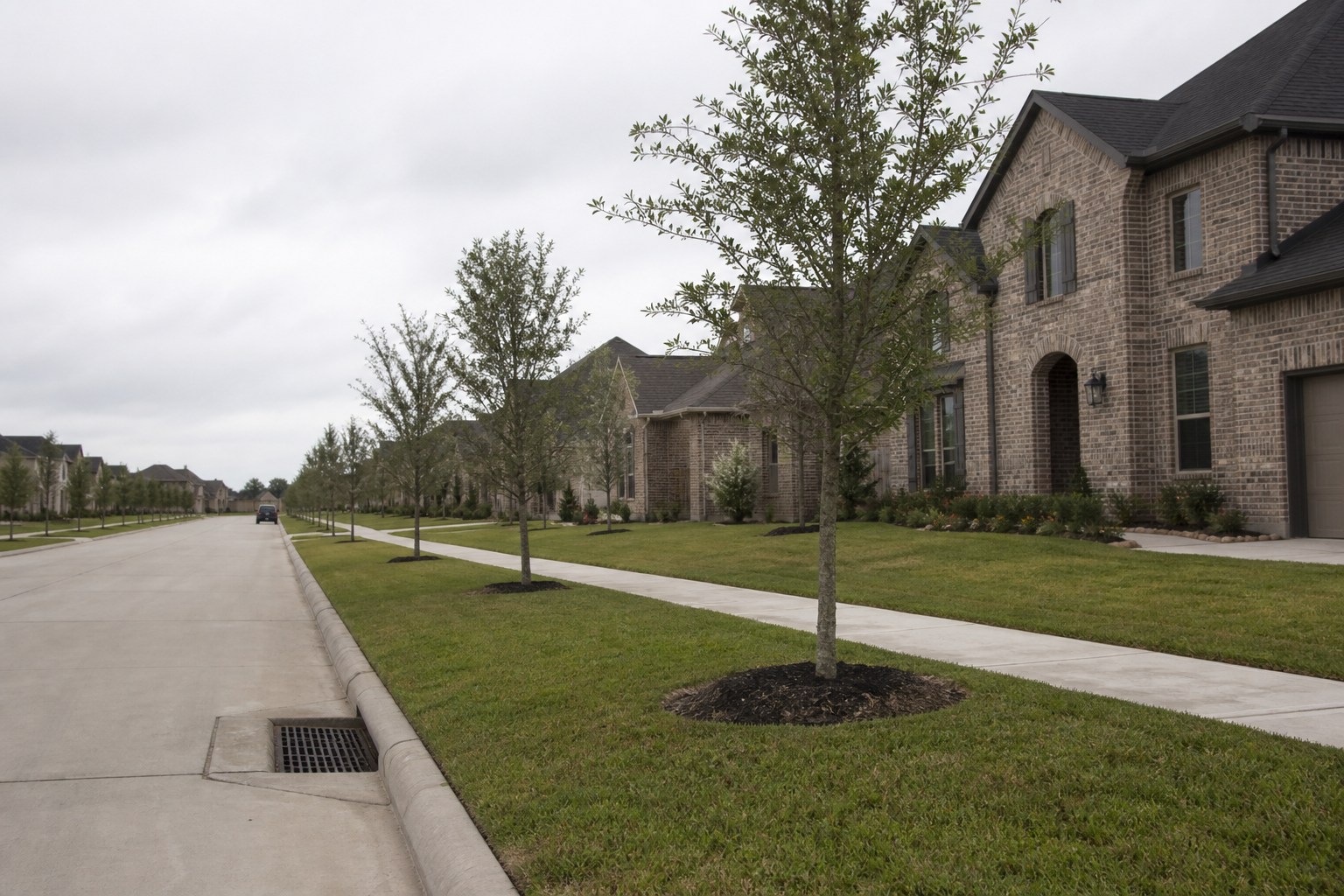
I do not book a suburban Houston tour until I know whether the address sits in a MUD, and what that line does to the monthly payment. The list price is not the whole bill. Two houses at the same ask, in the same school district, can differ by a couple hundred dollars a month once the MUD rate is in the escrow.
The full explainer is in my Houston MUD tax buyer guide. This post is the pre-tour stack: the three numbers I pull, how they show up on a loan estimate, and what I will not let slide into the option period.
This is general information, not tax or legal advice. Confirm the district and the current rate with the title commitment and a Texas tax professional before you write.
A Municipal Utility District is a Texas special-purpose government. It issues bonds to pay for water, sewer, and drainage where a city is not providing those lines, then it taxes the houses in the district to repay the bonds. It is not an HOA. It is not a builder surcharge. It is a line on the property-tax bill, set per $100 of assessed value, the same way the county and the ISD are.
Before we tour, I want three facts on the address: the MUD name and number, the current rate, and the bond debt still outstanding relative to the district's tax base. The rate alone is a snapshot. A new district at $1.00 or more per $100 is doing what new districts do. A mature district at $0.10 to $0.25 has already paid a lot of that debt down. The ratio tells you how much runway is left. I also glance at the last five to ten years of the rate. Falling is the usual path. Flat or rising usually means new bonds for an expansion.
If you are shopping new construction in Bridgeland, Cinco Ranch, Cross Creek Ranch, Aliana, Sienna, Towne Lake, Harvest Green, or Meridiana, assume a MUD until the title commitment says otherwise. That is the pattern in my Houston new construction notes. Inside the City of Houston, the Heights, Memorial, and most of the Inner Loop, MUDs are rare. The mix is in the Houston submarket comparison and the ZIP-level map in Houston MUD districts by ZIP code.
On a $350,000 assessed value, a $0.80 MUD is about $2,800 a year, or roughly $233 a month inside escrow. A brand-new district at $1.10 is closer to $3,850 a year, about $321 a month. A mature district at $0.25 is about $875 a year, about $73 a month. Same house price. Different tax line.
Lenders bundle county, ISD, MUD, and any LID or ESD into the escrow they collect with principal and interest. If one loan estimate used a state-average tax rate and the other used the actual combined rate, you are not comparing the same payment. I want the real combined number on both houses before anyone falls for a kitchen. First-time buyers run into this constantly; the setup is in the first-time Houston buyer guide.
The homestead exemption and the 10 percent appraisal cap sit on a different part of the bill. They do not erase a MUD. They change how fast the school-tax piece can grow after you occupy. That is in my Texas homestead exemption notes. Do not mix those two conversations.
Texas Water Code section 49.452 requires a signed MUD Notice before the contract is executed, or as an addendum at signing. A current-information version is signed at closing and recorded. If that notice is late, the buyer can terminate through closing day. I will not treat a missing notice as a paperwork nicety.
I also want the PID, LID, and ESD lines named if they exist. A PID is often a fixed assessment for landscaping and gateways. A LID funds levee work. An ESD funds fire and EMS outside a city department and is capped at $0.10 per $100. They are not MUDs. They still hit the monthly.
The five-phase buyer sequence, from letter to funded close, is in the Houston buyer guide. The MUD pull belongs in phase one, next to the pre-approval letter, not in week two of a contract when the tax certificate lands.
Can I ignore the MUD if the list price looks right?
No. The list price does not include the tax line. I will show you the monthly with the actual combined rate before we tour. If the cheaper-looking house has the heavier MUD, it is not cheaper.
Does a MUD rate only go up?
Usually the opposite in a built-out district. Bonds get paid down and the rate eases. A board can still raise it after a bond election. I read the trend, not a slogan.
Is this the same as flood-zone work?
No. A MUD pays for water, sewer, and drainage infrastructure. Flood zone is a FEMA and insurance question. I run both, separately, before the showing.
If you want the full rate tables and the TCEQ and Comptroller path, start with the Houston MUD tax buyer guide. If you want the three numbers pulled on a specific address, call or text 832-343-8383.
Eddie Weir, REALTOR® · Top 1% REMAX Producer · ABR, LUXE · License #560899. Informational only, no guarantee of outcomes. If you're currently working with a REALTOR®, please disregard.




 Erase note
 You currently have no custom folders