Sign In
Create an account and enjoy all the benefits of HAR.com!
Sign In
Sign in using social account


When it comes to your home's energy efficiency, thermostats are often overlooked. Over the years, however, they have evolved significantly, becoming more advanced and boosting energy efficiency. Some models even allow for remote control, letting homeowners adjust settings even when they are not home. In this blog, I’ll explore the features and benefits of these smart thermostats.
What are the benefits of upgrading your thermostat?
Your HVAC system works hard to reach your selected temperature. The bigger the gap between the outside and inside temperatures, the harder it has to work. For instance, in the summer, the afternoon heat causes a significant difference, making your system consume lots of electricity to cool your home. But if you're not home in the afternoon, why waste energy? It makes sense to give your HVAC system a break and save electricity. Today's thermostats can be programmed to heat and cool based on a schedule. Some even detect if you're home or away, adjusting automatically to save you money.
Types of Thermostats
When upgrading your thermostats, you've got plenty of options. Let's start with the basics and move to more advanced types.
Conclusion
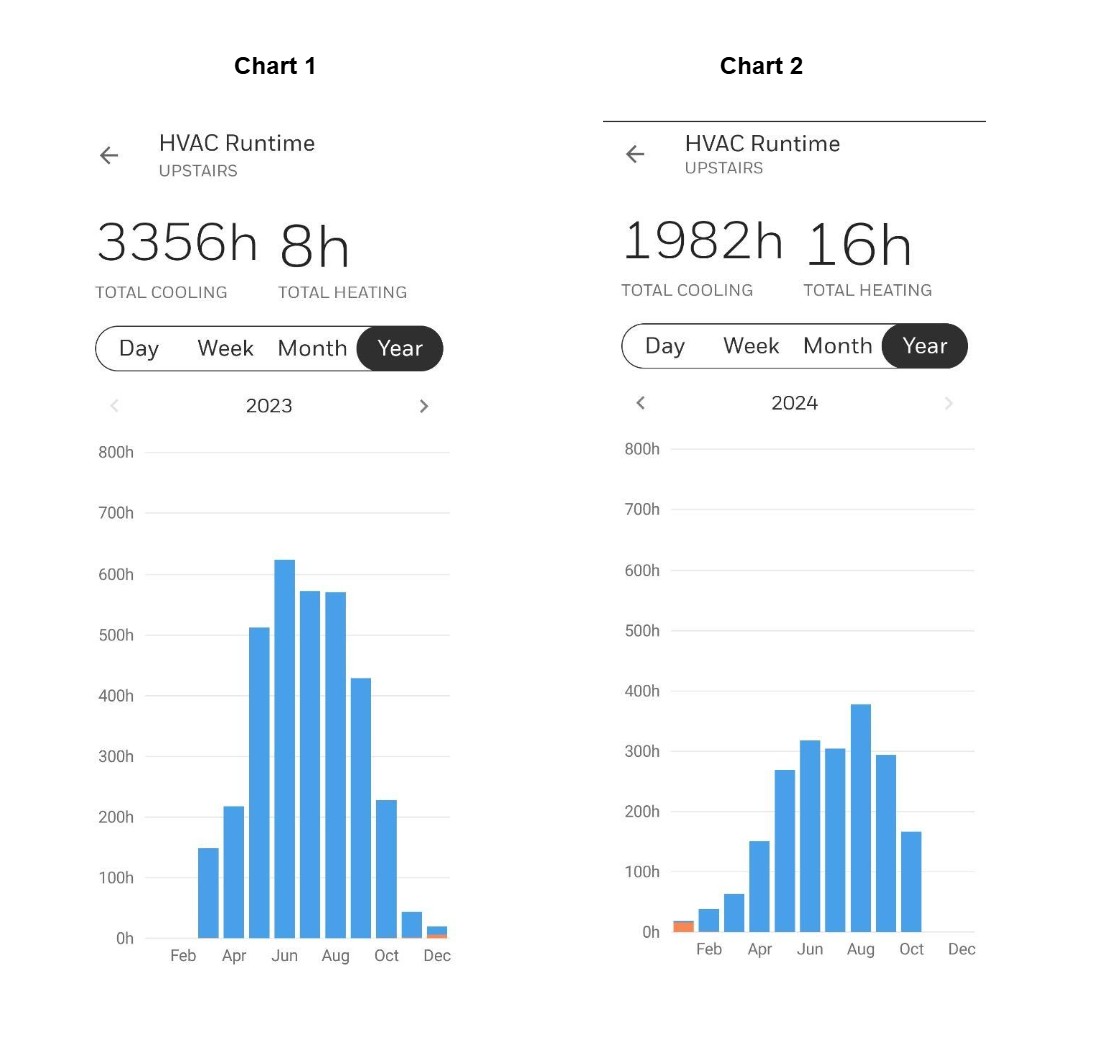
No matter which option you choose, upgrading your thermostat is likely to save you money. The upgrade cost is relatively low, and it's not difficult for the average “do-it-yourselfer” to install. I upgraded my thermostats to the Honeywell T5 devices for both upstairs and downstairs. I've enjoyed using them to monitor the improvements in my home's energy efficiency. Check out the picture of my HVAC unit charts that show the following: Chart 1 shows my HVAC unit's run hours before my home efficiency projects to date, and Chart 2 shows the run hours after. That is a big reduction in cooling hours!
Stay tuned for my next blog where I discuss energy-efficient windows. Please subscribe to my blogs, follow me on my social channels, and if you need a knowledgeable realtor®, call me!


 Erase note
 You currently have no custom folders