Sign In
Create an account and enjoy all the benefits of HAR.com!
Sign In
Sign in using social account


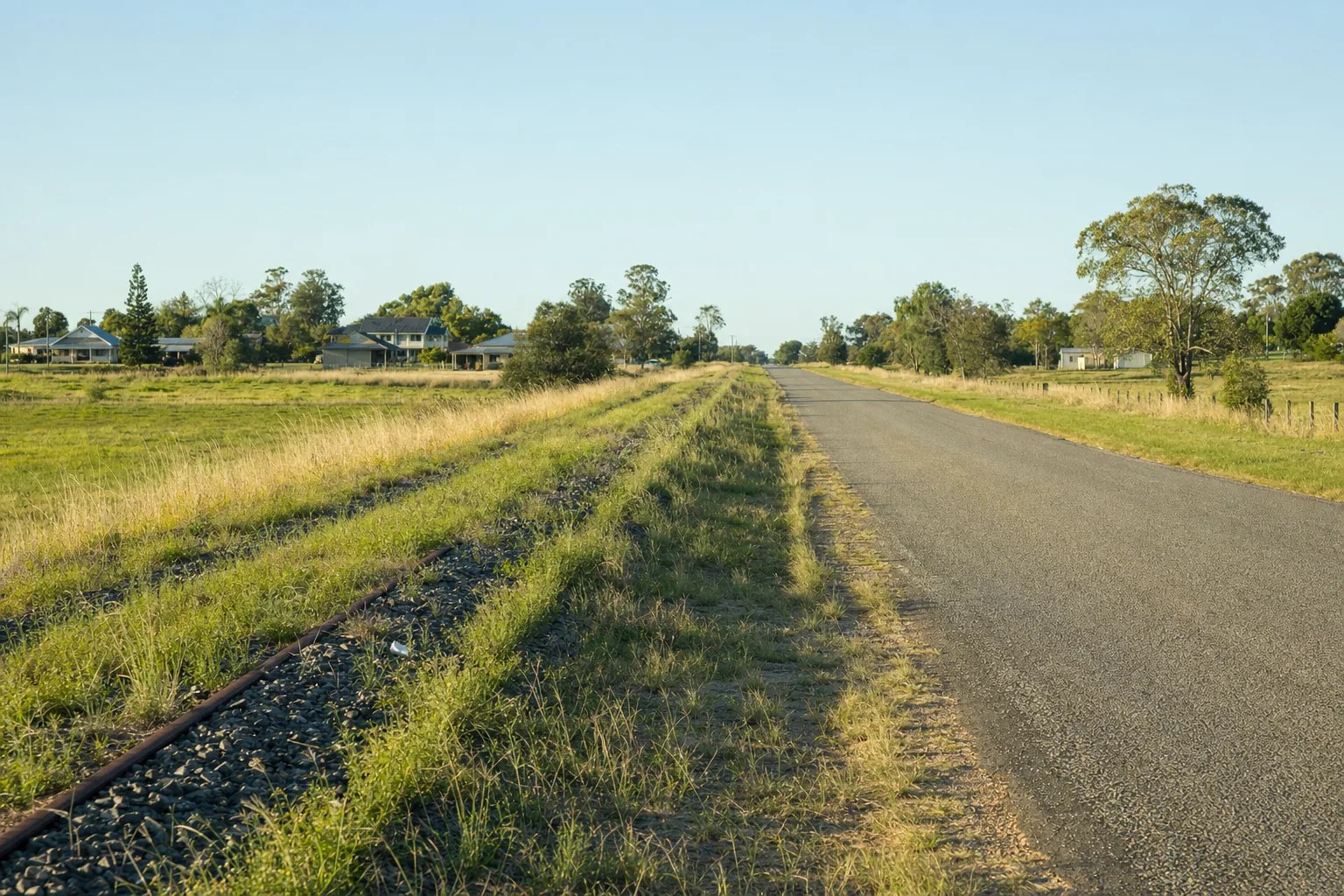
Santa Fe is younger than most of the houses in it. The city was created on 21 January 1978, when a ballot proposal to incorporate Alta Loma and parts of Arcadia passed by a wide margin. It has since grown to take in all of Arcadia and parts of Algoa.
Three older communities, absorbed into one city inside living memory. That history is charming on a plaque and inconvenient in a title search, because the older names did not disappear from the record when the city took the land in.
A deed written in 1962 describes land the way 1962 described it. A survey references a subdivision plat filed under a name that is no longer a place. An affidavit of heirship from the 1980s names a community that is now a neighbourhood.
None of that is wrong and none of it invalidates anything. It does mean the paper trail for an older Santa Fe property may not say Santa Fe anywhere, and a seller who does not know the former name of their own ground cannot help a title company that is struggling to connect two documents.
If you are dealing with an inherited property here, that is worth an hour before it is worth a lawyer. Find out what your land was called before 1978.
Here is a small illustration that this is not merely historical.
The Texas Department of Insurance publishes its windstorm zone listings by county, naming the places in each zone. On the Galveston County listing, Santa Fe appears in the Inland I zone. So does Algoa, separately, as its own entry, even though the city has grown to include part of it.
Both are in the same tier, so nothing turns on it here. But it shows that state records still carry the older names as distinct entries, which is exactly the situation that confuses a search when the two names sit in different tiers or different files.
Inland I means a 120 mph three-second gust design wind speed, the middle of three tiers in this county. Galveston Island and the peninsula sit above it in Seaward at 130 mph. Friendswood sits below in Inland II at 110 mph.
The requirement is about work, not age: most new construction, roof replacements, major repairs, and other alterations require an inspection and certificate of compliance. Two certificates exist, a WPI-8 for ongoing construction and a WPI-8-E for completed construction, the second existing because work often gets done without an inspector.
The consequence lands at the sale. Owners who cannot get windstorm cover privately can buy through the Texas Windstorm Insurance Association, and the association requires valid certificates of compliance showing the building meets code. No certificate, no policy. No policy, and a buyer with a mortgage has a lender that will not fund.
Santa Fe has more room per house than most of the county, which most owners regard as the point of living here. It also changes a calculation that matters after damage.
Underneath the flood rules sits a floor nobody in Texas goes below. Section 16.315 of the Texas Water Code says all political subdivisions are authorized to take all necessary and reasonable actions that are not less stringent than the requirements and criteria of the National Flood Insurance Program. A floor and not a ceiling.
The substantial damage test asks whether restoring the structure to its before-damaged condition would cost half or more of the structure's market value immediately before the event. Measured before the damage, not in the current condition, and excluding land value.
On an acre or more, the land can carry a large share of what the property is worth. Take it out of the denominator and the figure the fifty percent is measured against drops, sometimes a long way. Owners here run the numbers against the whole property and conclude they are nowhere near the threshold, and the structure-only figure says otherwise.
Find out what your land was called before 1978 if the house predates the city, and check that the chain of title connects cleanly across the name change. Search the windstorm certificates that exist on the address. Reconstruct the work history honestly, roofs first. Ask the city whether a substantial damage determination has been made. Pull the structure's improvement value from the Galveston Central Appraisal District, not the total appraised value. Then get a full written repair estimate and set the two numbers against each other.
Do that before hiring anyone and before deciding to sell. Many owners find everything explicable and the repair fundable, and where that is true, staying is the better outcome by a distance.
The failure is usually paperwork rather than structure. A title search stalls on a pre-incorporation description nobody can connect. A certificate gap surfaces alongside it. The buyer's rate lock runs down while two separate problems get untangled, and the deal dies of delay rather than of any single defect.
At that point the honest comparison is between what an as-is sale nets and what resolving the record and finishing the work actually costs, not between an offer and what the house was worth before any of it began. If that is the comparison in front of you, we buy houses santa fe tx sets out how an offer on a house with title or condition problems is calculated.
For the neighbouring city where a creek rather than a merger does the dividing, I wrote the one where the county line runs through the middle of town.
I am a licensed Texas real estate agent and I also buy houses in this area for cash, including ones with title and condition problems, so treat the paragraph about selling as coming from someone with a commercial interest in it. Nothing here is legal advice, and a broken chain of title is a question for a real estate attorney rather than for me.
The 21 January 1978 incorporation vote covering Alta Loma and parts of Arcadia, and the city's subsequent growth to include all of Arcadia and parts of Algoa, are matters of public record. Santa Fe's and Algoa's separate placements in the Inland I zone, the design wind speeds, the inspection requirement and the certificate types come from the Texas Department of Insurance's published material for Galveston County. The federal floor is quoted from Section 16.315 of the Texas Water Code.


 Erase note
 You currently have no custom folders