Sign In
Create an account and enjoy all the benefits of HAR.com!
Sign In
Sign in using social account


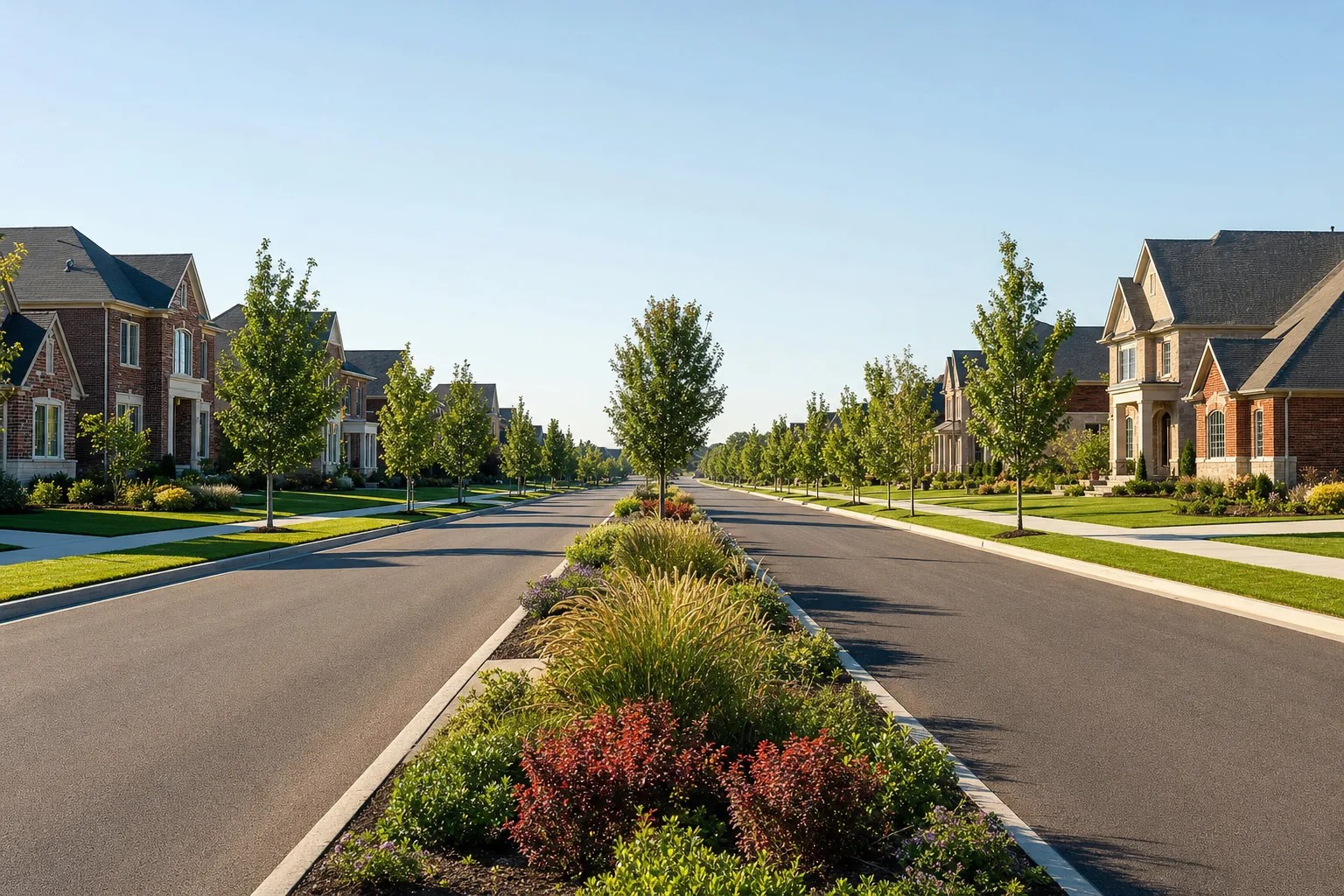
Pearland is shaped the way it is because of a defensive manoeuvre carried out in 1960, and that manoeuvre is still deciding which courthouse holds your deed.
In 1960, during a period when cities across Brazoria County were incorporating or grabbing land to keep Houston out, Pearland annexed a strip a hundred feet wide that encircled sixty square miles and ran west to the Fort Bend County line. A lasso, in effect, thrown around territory the city did not yet occupy, specifically to stop Houston annexing it first.
It worked. Pearland incorporated in 1959 with two square miles and 1,910 people, and the 2020 census counted 125,828. It also left a city that sits in three counties at once.
Pearland is a city in Brazoria County with portions extending into Fort Bend and Harris counties. Most of it is Brazoria. Some of it is not.
Which one has your address decides where your deed records sit, which appraisal district sets the structure value used in any damage calculation, and where an estate document has to be recorded. Those are three separate consequences of one boundary that is invisible from the street and that nothing in daily life ever asks you about.
If the house came through a death in the family, that matters immediately. An affidavit of heirship or a probate document has to be recorded in the county where the land actually sits. Filed in the wrong county's records it gives notice of nothing, the chain of title stays broken, and the title company finds it during the commitment rather than before the listing.
This is the part that surprises people who think of Pearland as an inland suburb.
The Texas Department of Insurance runs a windstorm inspection programme over a designated catastrophe area covering 14 coastal counties. Brazoria County is one of them. Within Brazoria the department divides the area into zones by design wind speed, and it names the places in each.
Pearland is named in the Inland II zone, built to a 110 mph three-second gust design wind speed, alongside Alvin, Manvel, Brookside Village, Iowa Colony and Rosharon. Inland I, at 120 mph, covers Angleton, Clute, Freeport, Lake Jackson and others. The Seaward zone, at 130 mph, covers Quintana and Surfside Beach.
Inland II is the mildest tier. It is still inside the programme.
 What being inside it actually requires
The department's language is not limited to new builds: most new construction, roof replacements, major repairs, and other alterations require an inspection and certificate of compliance.
Two certificates exist. A WPI-8 is issued for ongoing construction, and a WPI-8-E for completed construction. The second exists because work regularly gets done without anyone calling an inspector.
The consequence is not a fine. Owners who cannot get windstorm cover privately can buy through the Texas Windstorm Insurance Association, and the association requires valid certificates of compliance showing the building meets code. No certificate, no association policy. No policy, and a buyer who needs a mortgage has a lender that will not fund an uninsurable house.
Separately from wind, there is a flood framework with a floor nobody in Texas goes below. Section 16.315 of the Texas Water Code says all political subdivisions are authorized to take all necessary and reasonable actions that are not less stringent than the requirements and criteria of the National Flood Insurance Program.
A floor and not a ceiling. Every jurisdiction may go above it and around this metro they have, by very different margins.
The substantial damage test asks whether restoring the structure to its before-damaged condition would cost half or more of the structure's market value immediately before the event. Measured before the damage rather than in the current gutted condition, and excluding land value. Where the lot carries a real share of what the property is worth, removing it drops the figure the fifty percent is measured against, sometimes well below what the owner assumed.
A city that went from two square miles to a metro-scale population in sixty years accumulated a great deal of construction across a great many jurisdictional moments.
Some of it was built when the land was county rather than city. Some was built under earlier codes. Some was done by owners who did not pull anything because at the time nobody local was asking. None of that is unusual and none of it is anybody's fault, but all of it sits in the house waiting for a transaction to surface it.
Confirm which of the three counties your address is in, and get it in writing. Search for the windstorm certificates that exist on the property, because a buyer's insurance agent will. Reconstruct the work history honestly, roofs in particular. Ask the city whether a substantial damage determination has been made. Pull the structure's improvement value from the correct county's appraisal district, not the total appraised value. Then get a full written repair estimate and set the two numbers side by side.
Do all of that before hiring anyone and before deciding to sell. Many owners find the gap closeable and the repair fundable, and where that is true, staying is the better outcome by a wide margin.
The failure is specific and repeatable. A certificate gap or a determination surfaces mid-contract. The retroactive route costs money and weeks nobody planned for, the buyer's rate lock runs down, and the deal dies. The house sits while the next buyer's lender asks the identical question.
At that point the honest comparison is between what an as-is sale nets and what finishing the work actually costs, not between an offer and what the house was worth before any of it began. A cash buyer is not waiting on an insurability answer. If that is the comparison in front of you, we buy houses pearland tx sets out how an offer on a house with certificate or condition problems is calculated.
For a neighbouring city where a creek does the dividing instead of a lasso, I wrote the one where the county line runs through the middle of town.
I am a licensed Texas real estate agent and I also buy houses in this area for cash, including ones with certificate and condition problems, so treat the paragraph about selling as coming from someone with a commercial interest in it. Nothing here is legal advice and it is not insurance advice.
The 1960 hundred-foot annexation strip, the 1959 incorporation figures and the 2020 census population are matters of public record. Pearland's placement in the Inland II zone, the zone wind speeds, the named places in each zone, the inspection requirement and the two certificate types come from the Texas Department of Insurance's own published material for Brazoria County. The federal floor is quoted from Section 16.315 of the Texas Water Code.


 Erase note
 You currently have no custom folders