Arizona-based Opendoor advertised its iBuyer service to people looking to sell their homes. The pitch: Opendoors cutting-edge technology would save sellers money by providing market value offers and reducing transaction costs. According to the company, We dont try to make low ball offers because, unlike a home flipper, our business model isnt based on buying low and selling high. The way we make money is by charging a fee for our service a process the company described as transparent, fair, and accurate.
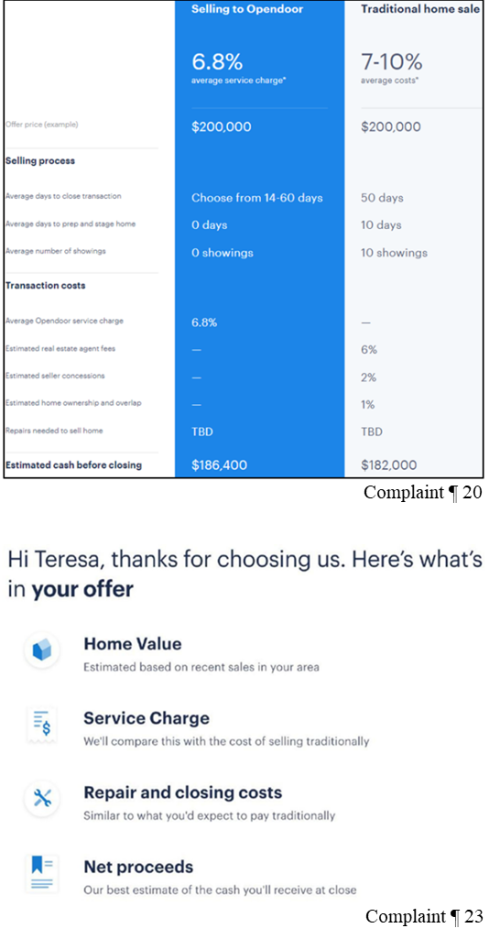
Once homeowners expressed initial interest, Opendoor sent them eye-catching charts that claimed to show a side-by-side comparison between customers projected net proceeds from selling their home to Opendoor versus selling it traditionally by listing on the market. The FTC says the charts almost always projected that homeowners would get thousands more by selling to Opendoor. As the complaint alleges, As of November 2019, over 90 percent of these charts used in accepted offers projected that the consumer would realize more net proceeds by selling to Opendoor. The average projected gain was more than 6,000.
Thats how Opendoor promoted its services, but the FTC says thats not how it panned out for most people. According to thecomplaint, In fact, the vast majority of consumers who sold to Opendoor lost thousands compared to what they would have realized in net proceeds from selling on the market because Opendoors offers have been below market value on average and its costs have been significantly higher than what consumers typically pay.
The complaint alleges that Opendoor engaged in practices that both increased the costs to customers and reduced offers to below market value. Opendoors approach to home repairs is one example. The company told prospective customers thatafter an in-person assessment of the property, it may require them to make or pay for certain repairs. However, Opendoor also said that it ask[s] for the repairs we anticipate the next buyer of the home will ask for fixes that customers would have to address before a traditional sale, too. Opendoor further claimed that consumers may even save money on repairs if they sell to Opendoor because we do our best to pass wholesale savings on to you from our partnerships with local vendors. But according to the FTC, Opendoors required repairs often cost thousands more than what people would have to pay before a traditional sale.
Furthermore, the FTC says Opendoor often took steps that reduced its offers to below what the companys own internal valuation system determined was the homes market value. Youll want to read thecomplaintfor details, but the allegation is that in many instances, the company adjusted offers to two percent below what Opendoor assessed as market value a practice that contradicted what it told homeowners.
To settle the case, Opendoor will pay 62 million, which the FTC will use for customer refunds. Among other things, theproposed orderprohibits misrepresentations about what homeowners will have to pay and requires Opendoor to have appropriate substantiation to support claims about the costs, savings, or financial benefits associated with using its service, including any comparisons to traditional home sales. Once the proposed settlement appears in the Federal Register, the FTC will accept public comments for 30 days.
Whats the key takeaway for other businesses?Too many companies that sell goods or services online or operate web-based platforms think that established consumer protection principles dont apply to them. Thats a major mistake.Fundamental truth-in-advertising standards protect people regardless of how companies choose to market their services.







 Erase note
 You currently have no custom folders