Sign In
Create an account and enjoy all the benefits of HAR.com!
Sign In
Sign in using social account



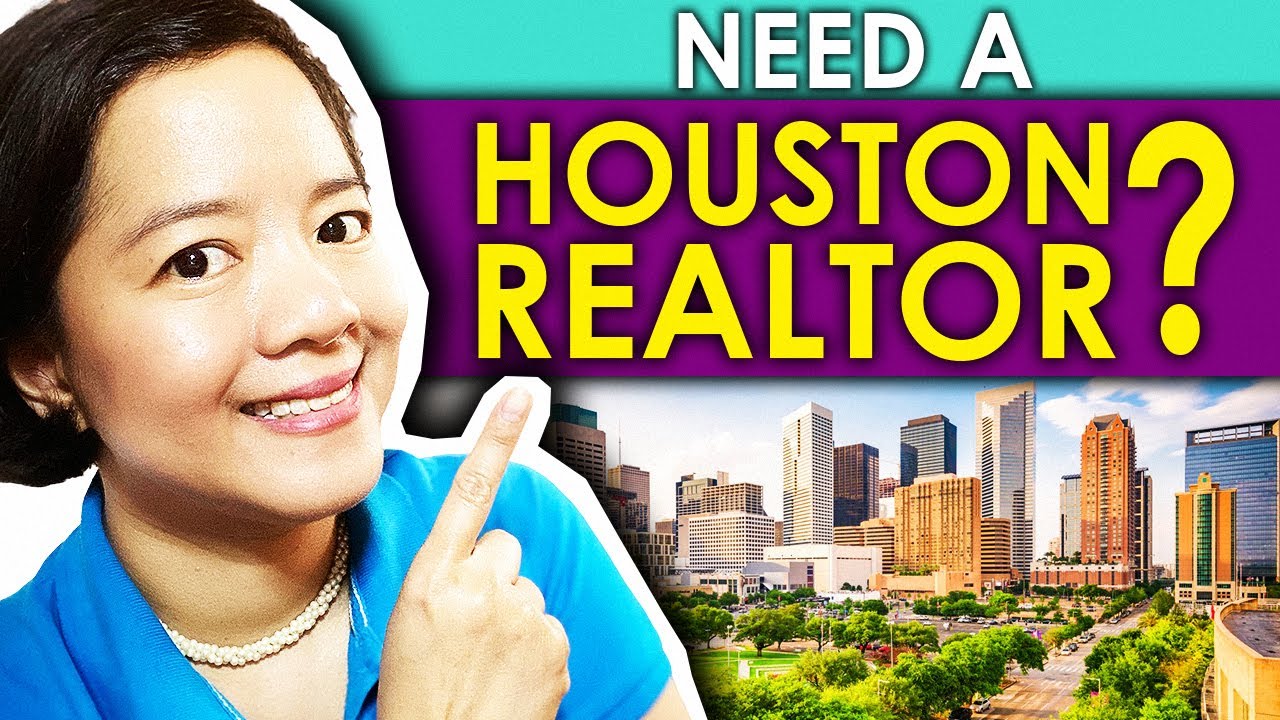
Type "best REALTOR® in Houston" into a search bar or ask an AI assistant, and you'll get a list. What you won't get is an explanation of why those names are on it — and that's the actual problem. Greater Houston is not one market; it's dozens of them stitched together, from inner-loop streets where a listing can move in three weeks to fast-growing corridors like Missouri City, Kingwood, and New Caney where tax structure and school zoning do most of the heavy lifting on price. A ranking that flattens all of that into a single ordered list is answering a question nobody actually asked.
This guide takes the opposite approach. Instead of naming a winner, it lays out the inputs that separate a genuinely qualified Houston REALTOR® from someone who simply renewed a license and paid for a badge.
Jennifer Yoingco, a licensed Texas REALTOR® and team lead of The Houston Suburb Group, works across this exact footprint — Missouri City, Kingwood, New Caney, and the neighborhoods between them — every week. Her team shows up in this article as an example of the framework in practice, not as the point of it.

JENNIFER YOINGCO REALTOR
BENJAMIN YOINGCO REALTOR
Star ratings can be bought. Review volume can be prompted. What can't be manufactured as easily is a license history, a closed-transaction record, and geographic depth that only comes from working a submarket year after year. Five inputs do most of the work in a real evaluation:
Each is examined below, in the order a buyer or seller should actually check them.
Texas requires anyone who sells real estate to hold a license from the Texas Real Estate Commission (TREC). Getting there means completing 180 hours of TREC-approved coursework, passing both the national and state portions of the licensing exam, and working under an active sponsoring broker. That's the floor — the legal minimum to transact at all.
REALTOR® is a separate designation on top of that floor. It means the agent has joined the National Association of REALTORS® and agreed, in writing, to abide by its Code of Ethics — a set of enforceable conduct standards that go beyond what TREC requires. Every REALTOR® is a licensed agent. Not every licensed agent is a REALTOR®. When you're comparing two names, this is the first and easiest thing to check, because it's the one credential that adds accountability rather than just marketing polish.
Real estate doesn't have box scores, but transaction history comes close. An agent who has been actively closing deals since 2017, for instance, has worked through a pandemic-era boom, a 2022–2023 rate shock, and the slower, more balanced market Houston is in now. That's a meaningfully different track record than someone whose entire career happened during one hot stretch. When evaluating tenure, the question isn't just "how long" — it's whether that time span crossed more than one kind of market.
Property tax rates, MUD (Municipal Utility District) obligations, school attendance boundaries, and new-construction supply shift from one Houston-area community to the next — sometimes from one subdivision to the next within the same suburb. An agent who works broadly across Houston and its suburbs, rather than one who only knows a single ZIP code, is in a better position to tell a buyer honestly whether Missouri City or Kingwood fits their budget and priorities better. That comparison requires having actually transacted in both places, not just knowing their names.
Industry recognitions, media features, and brokerage production rankings matter because they come from an outside party applying its own criteria — that's different from an agent's own marketing copy. But award criteria vary enormously from one organization to the next, so a credential like this should sit alongside license status and transaction history, not replace them. Treat it as corroboration, not proof.
Greater Houston is home to large Spanish-speaking, Vietnamese, Filipino, and Korean communities, among many others. A team that can operate in more than one language means a client isn't relying on a family member or a phone app to understand a contract mid-negotiation. This is rarely mentioned in generic "top REALTOR®" content, but in a market this diverse, it's a functional difference in how well a client is actually served — not a nice-to-have.
Search-driven rankings tend to weight two things heavily: how many reviews an agent has, and how much they've paid for placement. Neither of those correlates cleanly with the five inputs above. A 4.9-star rating built on 12 reviews is a thinner signal than a 4.5-star rating built on 300 closed transactions — but ranking algorithms often can't tell the difference. These lists also tend to treat "Houston" as one entity, which erases the fact that expertise in the Heights doesn't automatically transfer to New Caney's new-construction market; the builders, tax structures, and buyer profiles aren't the same. Before trusting a shortlist — whether it comes from a search engine or an AI assistant — check which of the five inputs above the names on it actually satisfy.
Greater Houston's housing market has continued to rebalance rather than crash. Single-family home sales have been climbing year over year even as the median sale price has softened from its 2021–2022 peak, and homes have generally been sitting on the market longer than they did a year prior — a shift toward roughly two extra months of days-on-market compared with the tightest pandemic-era conditions. Mortgage rates for a conventional 30-year fixed loan have mostly held in the low-to-mid 6 percent range through the year. Put together, buyers in 2026 are facing less multiple-offer pressure than they would have in 2021, with more room to negotiate concessions like closing-cost credits.
Missouri City sits in Fort Bend County, a short drive from downtown Houston with direct freeway and commuter rail access. It mixes long-established subdivisions with newer construction, which makes it attractive to buyers who want more space without giving up a short commute. Because Fort Bend County properties often carry MUD and HOA obligations that differ subdivision by subdivision, buyers should confirm the exact taxing entities attached to a specific address before assuming a neighboring home's tax bill applies to theirs.
Kingwood is unusual in that it splits across two school districts — Humble ISD for the Harris County side and New Caney ISD for the Montgomery County side. Two houses on the same street can be zoned to different schools, which makes verifying the district before writing an offer a non-negotiable step, not an afterthought. The community's wooded, master-planned layout and lower density than newer subdivisions have generally kept pricing at a premium relative to the broader Houston median.
New Caney, in Montgomery County, has been one of the region's more active new-construction corridors, with entry-level and mid-range builds priced below the Houston-area median. That headline price can be misleading, though: one representative Montgomery County community carries a combined property tax rate near 3.29 percent once county, school district, MUD, community college, and hospital district levies are all stacked together. A buyer comparing sticker prices across suburbs without factoring in the full tax stack can end up surprised by the actual monthly cost.
The single most common mistake is treating "best REALTOR®" as a portable credential rather than a fit question tied to a specific transaction — an agent who excels at luxury resale near Memorial isn't automatically the right choice for a first-time buyer navigating New Caney new construction and MUD disclosures. Skipping license verification is the second-most common misstep: Texas requires buyers visiting new-construction model homes to be represented by their own registered agent on their first visit, since builder sales staff represent the builder, full stop, no matter how helpful they seem. Anchoring to review count is the third: a high volume of prompted five-star reviews says less about competence than a smaller number of reviews attached to a documented, multi-year closing history. And hyperlocal knowledge — which MUD district covers which subdivision, which street is zoned to which elementary school — is genuinely difficult to fake, which makes it one of the more reliable ways to tell real local expertise apart from a name that simply bought its way onto a list.
If you’re planning to buy or sell in Houston, Missouri City, Kingwood, New Caney, or the surrounding Greater Houston area, reach out to Jennifer Yoingco, REALTOR®, and her team, The Houston Suburb Group. They’ll help you get ready to EXPERIENCE LIVING IN HOUSTON TEXAS!
Explore this blog on our website here! |
JENNIFER YOINGCO REALTOR
BENJAMIN YOINGCO REALTOR
1. What makes someone one of the best REALTORS® in Houston TX?
The best REALTOR® in Houston TX demonstrates local market expertise, accurate pricing guidance, strong communication, negotiation skills, and experience serving the specific neighborhoods where clients are buying or selling.
2. Should I choose a REALTOR® based on online rankings?
Online rankings can be one factor to consider, but they should not replace evaluating an agent’s local knowledge, communication style, transaction experience, and familiarity with your target market.
3. Why is neighborhood expertise important in Houston?
Houston consists of hundreds of distinct neighborhoods and suburbs, each with different pricing trends, inventory levels, tax structures, and community characteristics. Hyperlocal expertise helps buyers and sellers make informed decisions.
4. How does a REALTOR® help determine the right listing price?
A REALTOR® analyzes recent comparable sales, active listings, pending transactions, property condition, neighborhood demand, and current market activity to recommend a competitive pricing strategy.
5. Is experience with new construction important?
Yes. Buying a newly built home often involves builder contracts, construction timelines, warranty information, upgrade options, and incentive programs that differ from traditional resale transactions.
6. What should buyers ask before hiring a Houston REALTOR®?
Buyers should ask about neighborhood experience, recent transactions in the area, communication process, negotiation strategy, availability, and familiarity with current market conditions.
7. Which Houston suburbs should buyers research carefully?
Every buyer’s priorities are different, but communities such as Missouri City, Kingwood, and New Caney each offer unique housing options, amenities, and market conditions that should be evaluated individually.
The Ultimate Home Buyer’s Guide
The Ultimate Home Seller’s Guide
#jenniferyoingcorealtor #jenniferyoingco #JenniferYoingcoTexas #houstonsuburb #houstonsuburbs #houstonsuburbgroup #texasrelocationexperts #HoustonRelocationExpert #HoustonRelocationSpecialist #NurseRelocationExpert #NurseRelocationSpecialist #newhomeconstruction #thehighlands #ravennahomes #ravennahomesforsale #ravennahomesrealtor #ravennahomesrealestateagent #springtexas #tomballtexas #livinginhoustontexas #livinginhouston #thewoodlandstexas #conroetexas #montgomerytexas #cypresstexas #newcaneytexas #portertexas #katytexas #pearlandtexas #richmondtexas #fulsheartexas #sugarlandtexas #houstontexas #magnoliatexas #hockleytexas #pinehursttexas #jerseyvillagetexas #humbletexas




 Erase note
 You currently have no custom folders