Sign In
Create an account and enjoy all the benefits of HAR.com!
Sign In
Sign in using social account


Don’t let your desire to upgrade your home downgrade your home’s market value. Before you make a renovation fantasy a reality, consider whether the project will pay off when you’re ready to sell. Plenty of home improvements add value, but others — like these five — can hurt it.
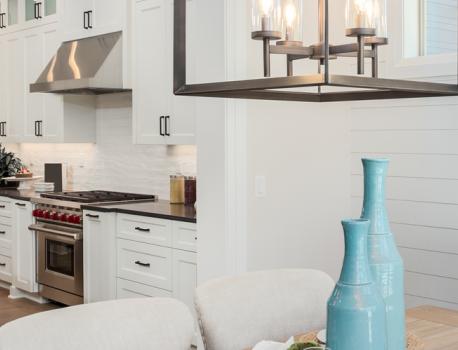
If you love to cook, a high-end kitchen could be the ultimate gift — for you. But if you think a massive overhaul will majorly impact resale value, you might be in for a surprise. An upscale kitchen renovation recoups just 54% of its cost in added value, according to Remodeling magazine’s 2020 Cost vs. Value report.
“If you do marble countertops and high-end appliances, you could spend $100,000, and it doesn’t necessarily mean your house is worth an extra $100,000,” says Beatrice de Jong, a consumer trends expert for Opendoor, a San Francisco-based direct home buyer and seller.
Smaller kitchen upgrades could yield a bigger payoff. Chris Arienti, broker and owner of Remax Executive Realty near Boston, suggests keeping updates reasonable: Think granite rather than marble, and GE instead of Sub-Zero.
A bold statement wall can say the wrong thing to potential buyers if the workmanship is questionable. Streaky, chipped or low-quality paint can knock $1,700 off a home’s sale price, according to Opendoor data that looked at home offers made from June 2018 to June 2019.
“A good paint job is not easy,” says Sarah Cunningham, a real estate agent with Ethos Design + Remodel in Boise, Idaho. “It is all in the prep work, and most people don’t want to do the prep work.” Hiring a professional to paint can help ensure a more attractive result.
Knocking down a wall to create an oversize master bedroom or stealing closet space to build out a spa-style bathroom may sound dreamy. But how about as a selling point? “If you go from five bedrooms to four, and you can make it work, no big deal,” Arienti says. But he cautions that losing a bedroom in a smaller house could mean a lower selling price.
As for cutting into closet space, residential building codes don’t mandate that bedrooms have closets. But, Arienti says, “Once you take the closet out of a bedroom, to a buyer, that no longer looks like a bedroom.”
Carpet can be especially unattractive to first-time home buyers, who may be used to landlords updating carpet between renters, de Jong says.
“In general, people are grossed out by [carpeting]. It can make a room look a little bit dated.”
It can also ding your sale price. Carpet as the primary flooring in a house drops the value by $3,900 — and carpeting in the master bedroom causes a $3,800 plunge, according to Opendoor. Conversely, a 2019 report from the National Association of Realtors estimated that sellers could recoup the entire cost of refinishing hardwood floors. New wood flooring could actually add value, with sellers getting $1.06 for every dollar spent according to NAR.
It doesn’t matter if it’s infinity edge or above-ground: Any pool can be seen as a drawback by buyers who don’t want to deal with maintenance or insurance. Even in Florida, a pool doesn’t add value, Liede DeValdivielso, a real estate agent with the Keyes Company in Miami-Dade, said via email. If you’re thinking resale, it’s not worth it — you’ll never recoup the cost, DeValdivielso said. But if you’ll use it and enjoy it, put in a pool.
To ensure you’re making an informed decision:




 Erase note
 You currently have no custom folders